 An unusually good moment to buy pieces you’d normally hesitate on, while they still have plenty of life left this season.
The post Rare Buck Mason Sale, Plus the Best Winter Deals You Can Still Wear Now appeared first on Primer.

An unusually good moment to buy pieces you’d normally hesitate on, while they still have plenty of life left this season.
The post Rare Buck Mason Sale, Plus the Best Winter Deals You Can Still Wear Now appeared first on Primer.
As winter continues to unfurl on New York’s Upper East Side, The Winter Show 2026 returned to the hallowed halls of… Read More
The post The Winter Show 2026 appeared first on Quintessence.

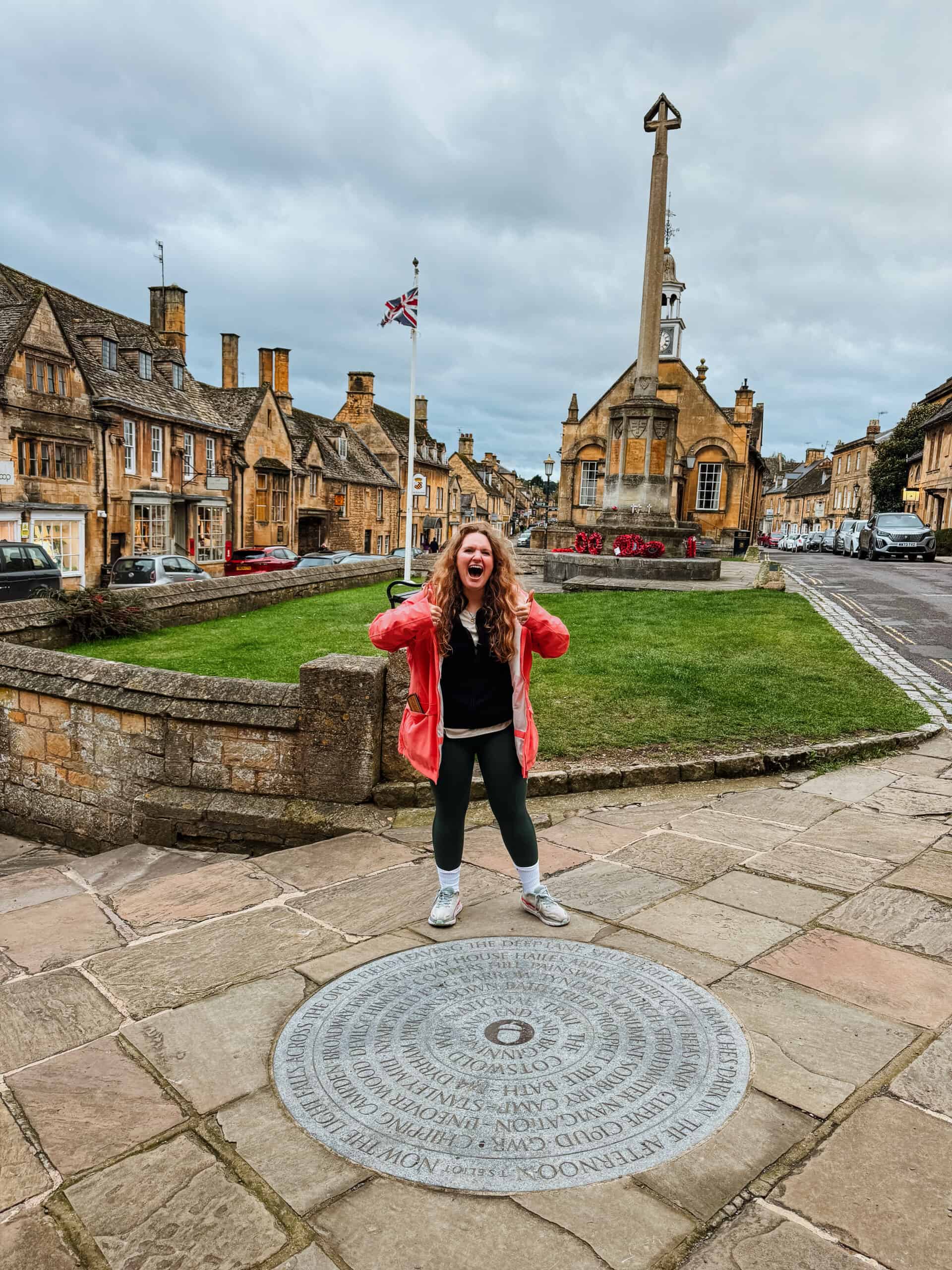
I don’t think I’ll ever forget the feeling of standing at the start of the Cotswold Way in the golden village of Chipping Campden. Early morning mist hugged the rooftops, and for a moment, the whole world felt hushed—like it was holding its breath right along with me.
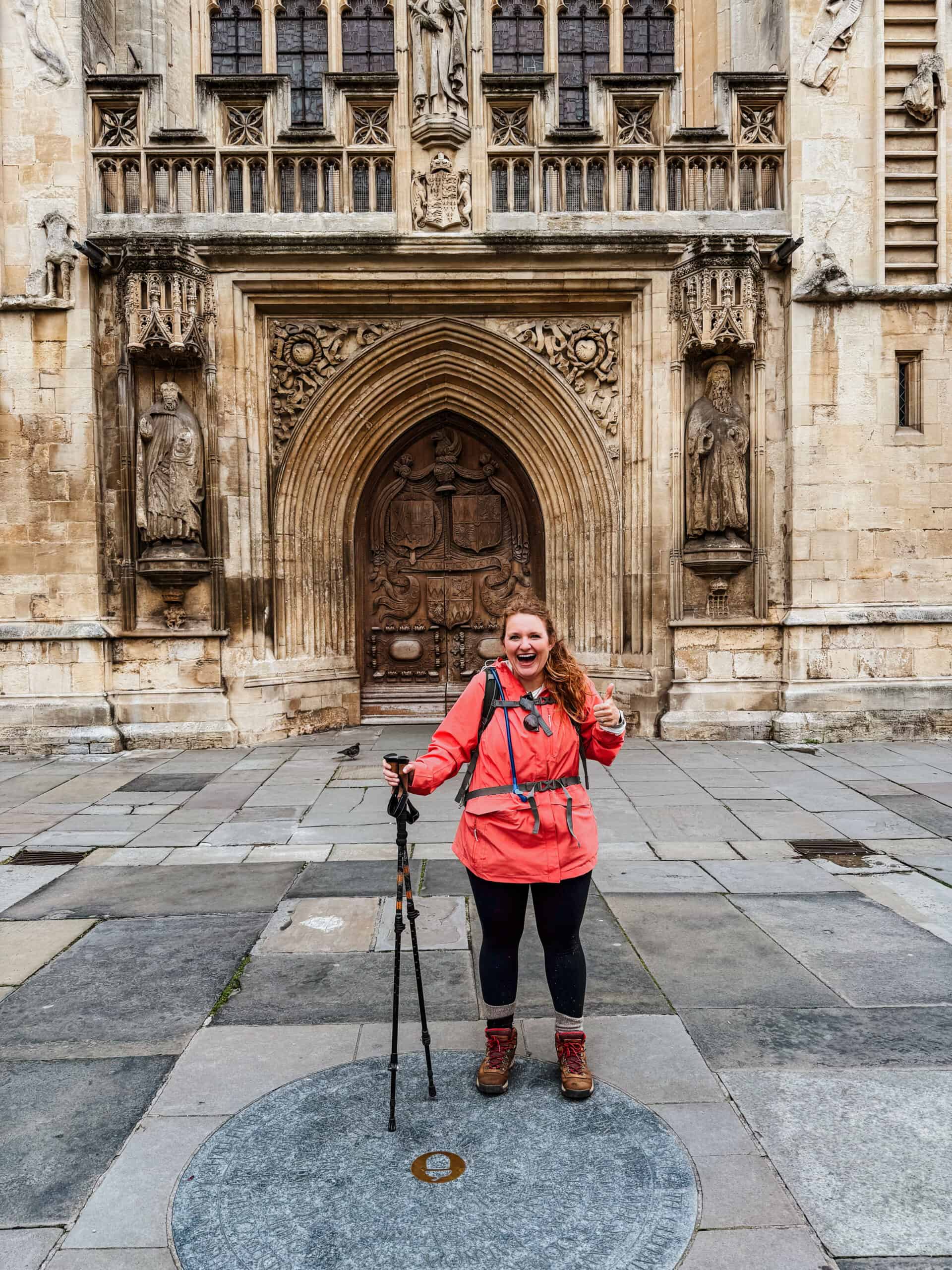
Could I really walk 100 miles across England’s countryside? Was I ready for the hills, the rain, the blisters?
I was nervous. But as I tightened the straps on my backpack and took those first steps past the old market hall, something shifted. I wasn’t just starting a walk; I was stepping into a story—a winding path through history, nature, and, truthfully, myself.
P.S. my favorite places in the Cotswolds are here!
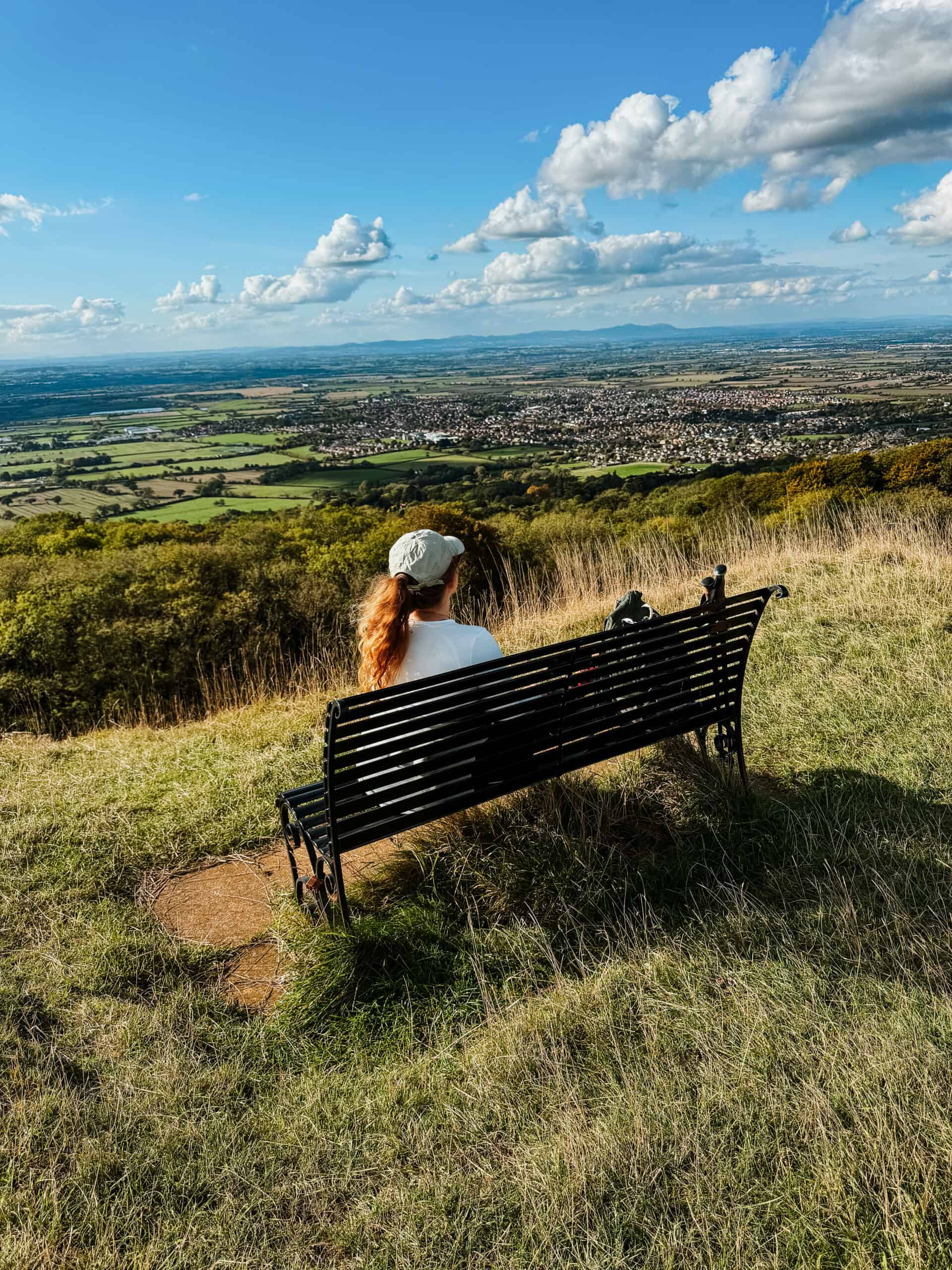
Over the next ten days, I wandered through ancient woodlands, climbed up to sweeping escarpments with views that made me stop in my tracks, and ended each day in villages so charming it almost felt like I had wandered onto a movie set. There were tough climbs and muddy boots, yes, but also those quiet, golden moments that stitched themselves into my memory: a deer darting through a misty field, the clink of a pub doorbell as I stumbled in for a much-needed pint, a local pointing me down an overgrown path with a smile and a “You’ll love this bit.”
Walking the Cotswold Way was so much more than just a hike. It was a journey—and one I’ll treasure for the rest of my life.
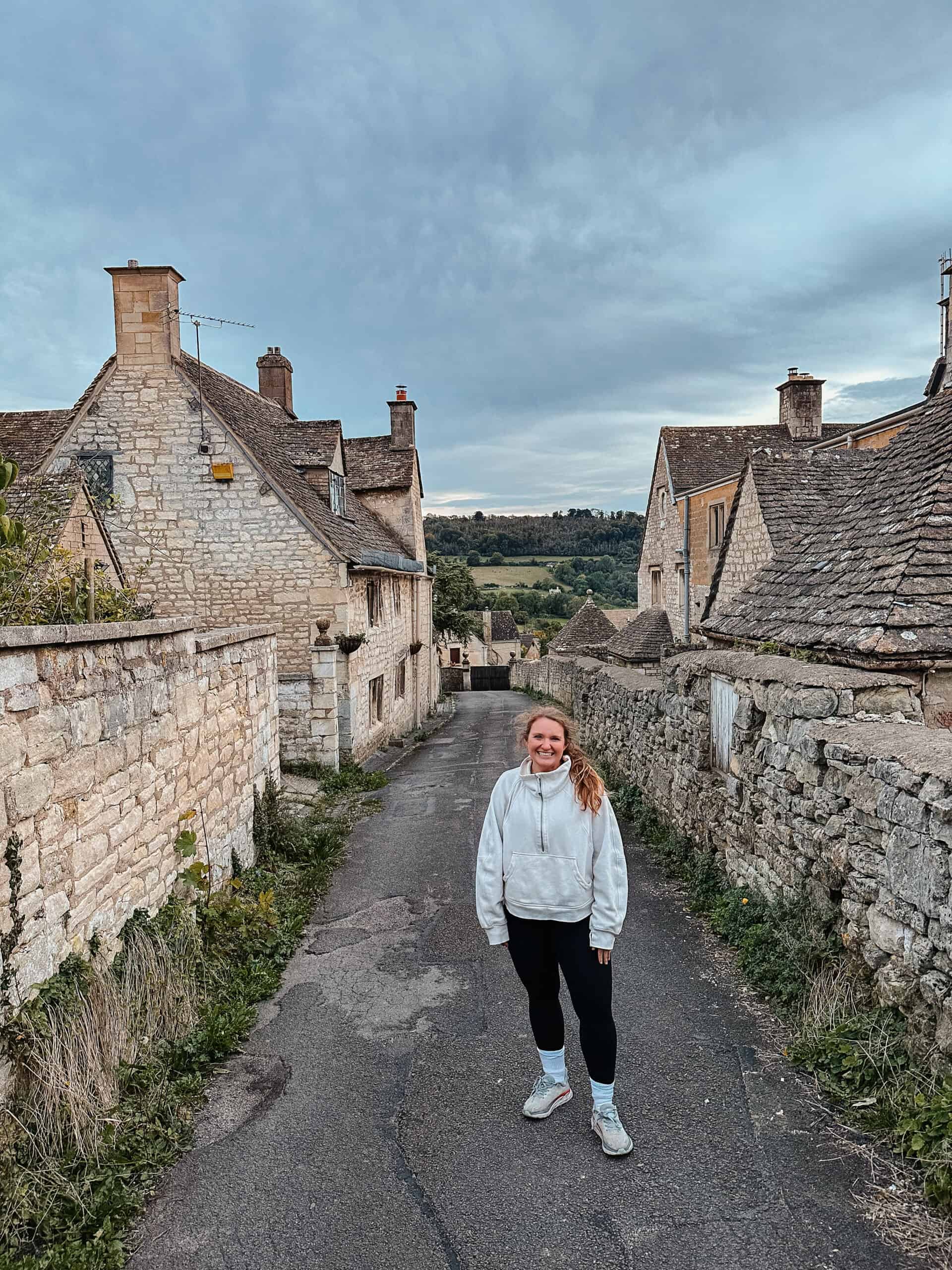
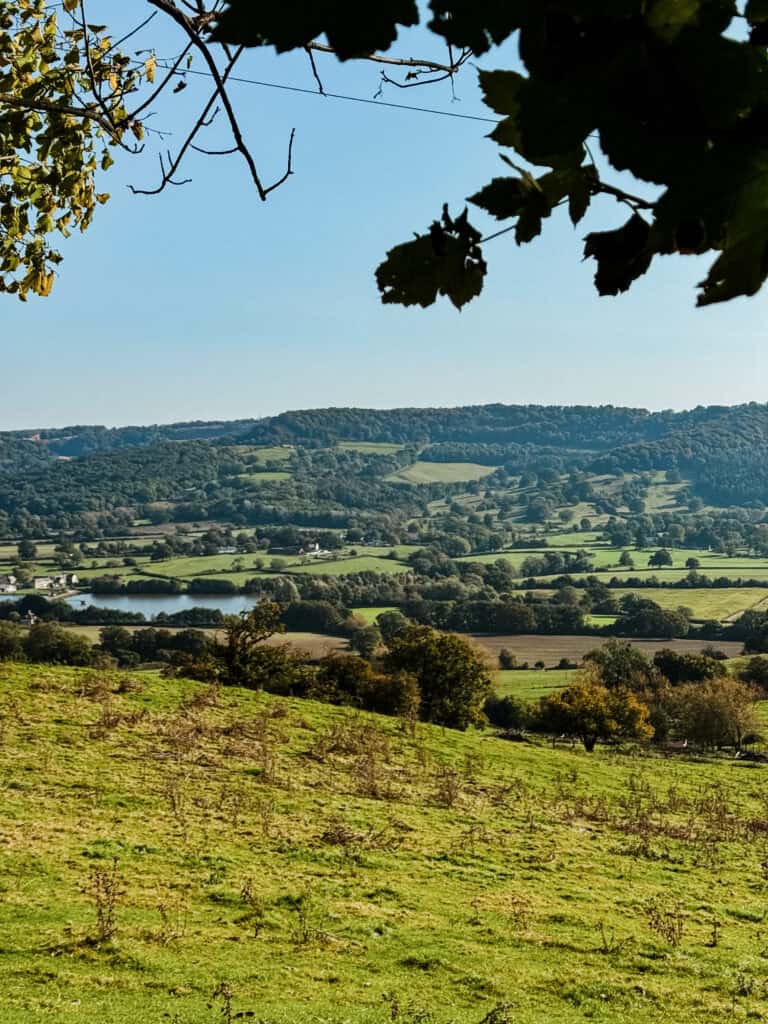
If you’re dreaming of taking on this trail, whether next month or “one day,” this is your friendly guide to what it’s really like to walk the Cotswold Way. (And if you want every step mapped out, with my full daily itinerary, hotel recommendations, and insider tips, you can check out my detailed guide here!
As of now people are already booking accomodation early for 2026 so it’s time to get on it!
The Cotswold Way is a National Trail in southwest England that runs about 102 miles (164 km) from Chipping Campden to Bath.
The Cotswold Way is one of the official National Trails in the UK—a collection of long-distance paths specially designated for their natural beauty, cultural importance, and historical significance.
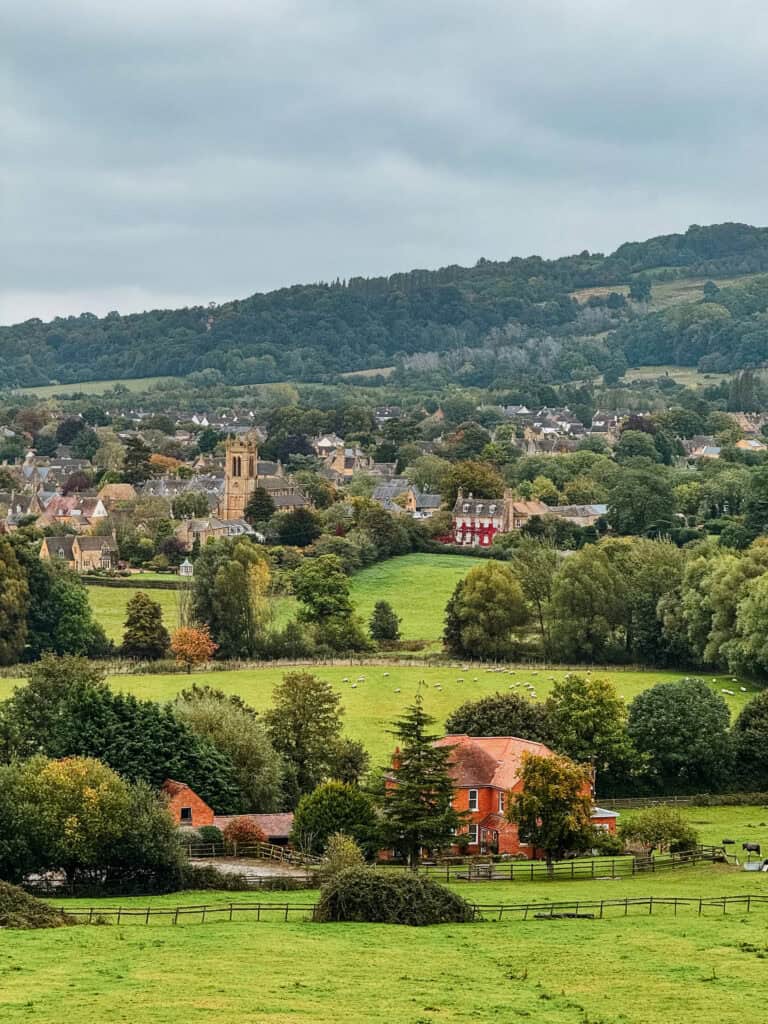
It travels through the Cotswolds Area of Outstanding Natural Beauty, famous for its rolling hills, ancient stone villages, sheep-dotted fields, and storybook scenery. Along the way, you’ll pass castles, battlefields, Neolithic burial grounds, and landscapes that look almost too beautiful to be real.
The Cotswold Way isn’t about speed; it’s about soaking it all in, one footstep at a time.
It feels like walking through a story book!
In May 2024 I decided to walk the Cotswold Way.
Not to be dramatic here but it changed my life.
I was living in Oxford, England and was feeling stressed and overweight. I told my husband and he made me a detailed 4 month training plan. I started training and eating healthy. I fell in LOVE with walking. I lost 30 pounds before the hike and discovered a deep love of the countryside and walking.
Here’s the exact training program I followed.
This training isn’t easy, it’s demanding. But it made the walk itself so so so wonderful. I actually ended up walking 131 miles because I did all the extra side trips because I felt SO good.
Most people take between 7 and 10 days to complete the trail, though ultra-marathon types might tackle it faster.
👉 If you want to enjoy the journey—stopping for cream teas, castle visits, and long pub lunches—I highly recommend giving yourself around 10 days.
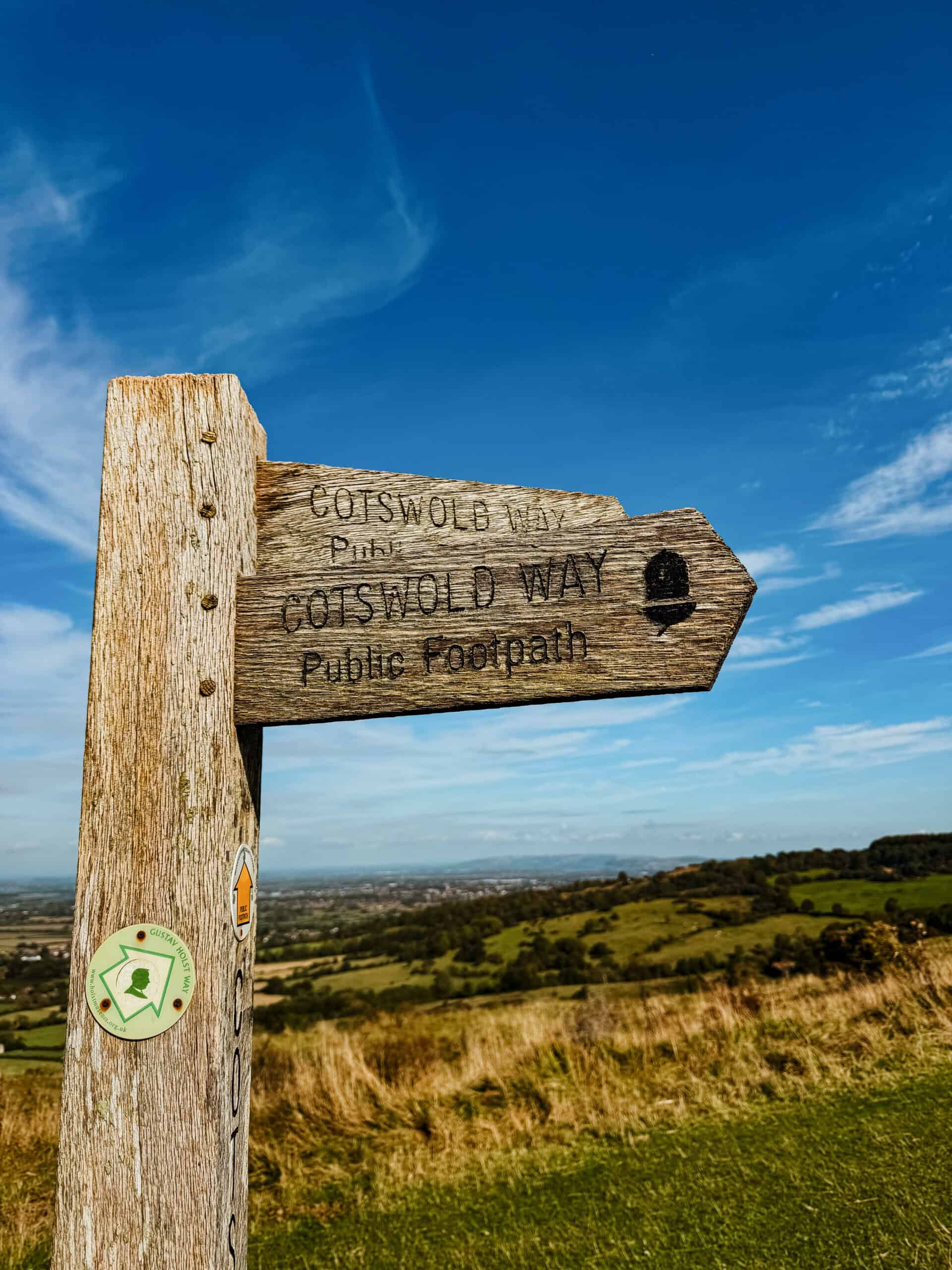
How long it takes to walk the Cotswold Way really depends on two things: how much you want to walk each day, and how much you want to explore beyond the trail itself.
Most people complete the Cotswold Way in 7 to 10 days.
I chose the slower, savor-everything route and walked the Cotswold Way over 10 days. And while the official trail itself is 102 miles, by the end of my journey, my GPS tracker showed that I had walked 131 miles total!
Why the extra miles?
Well, one of the best parts of walking the Cotswold Way is that you’re never far from something worth detouring for. I ended up taking side trips to explore castles, historic sites, hilltop monuments, and of course, charming villages slightly off the main trail. I couldn’t resist visiting places like Sudeley Castle in Winchcombe and Horton Court, a beautiful medieval manor house—and every extra step was absolutely worth it.

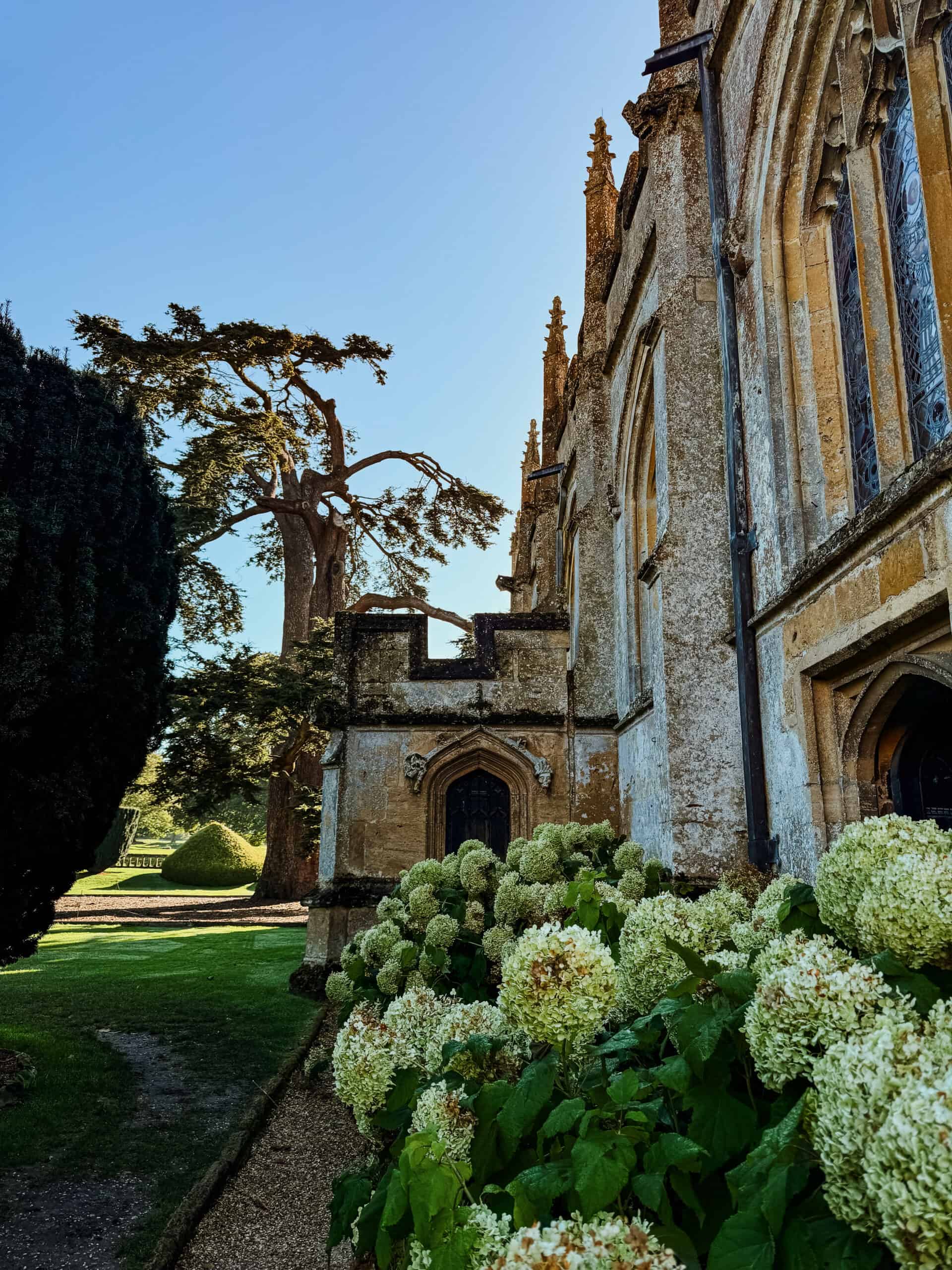
A few things that added miles for me:
So while the official distance is just over 100 miles, it’s good to plan for a little extra, especially if you’re anything like me and can’t resist a good side quest.
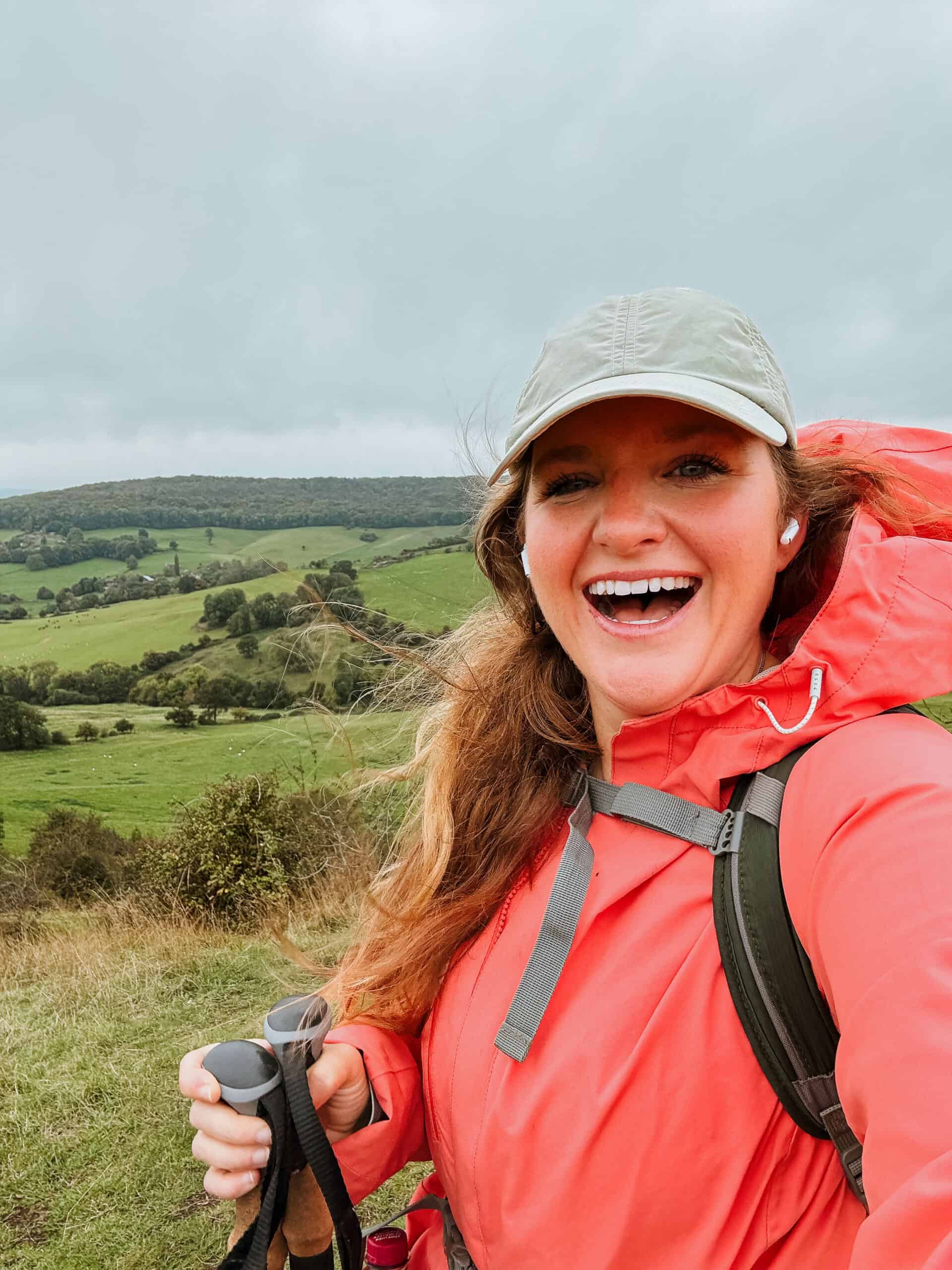
My advice:
And honestly? Those extra miles ended up being some of the most magical parts of my trip.
Trust me: your feet (and your soul) will thank you.
The Cotswold Way is rated moderate. It’s not a technical trail—no scrambling or mountaineering required—but it’s hillier than you might expect.
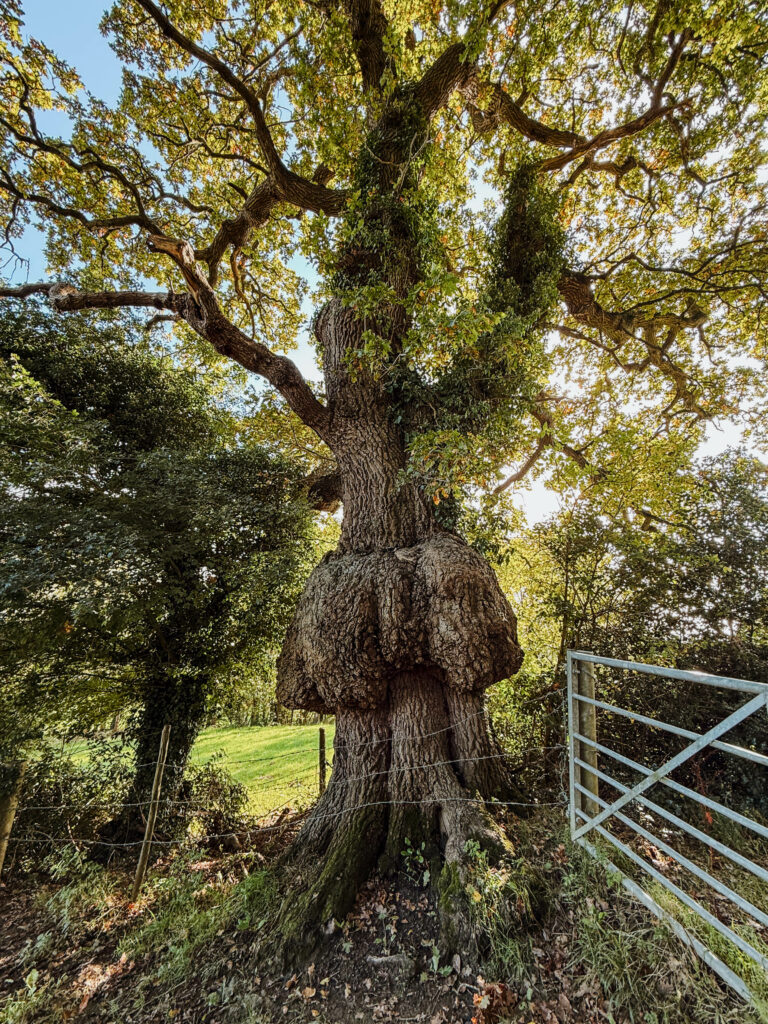
Each day brings a mix of steep climbs, gentle fields, wooded paths, and the occasional rocky patch after rain. Some of those hills are no joke, but the good news? Every climb comes with a view worth the effort.
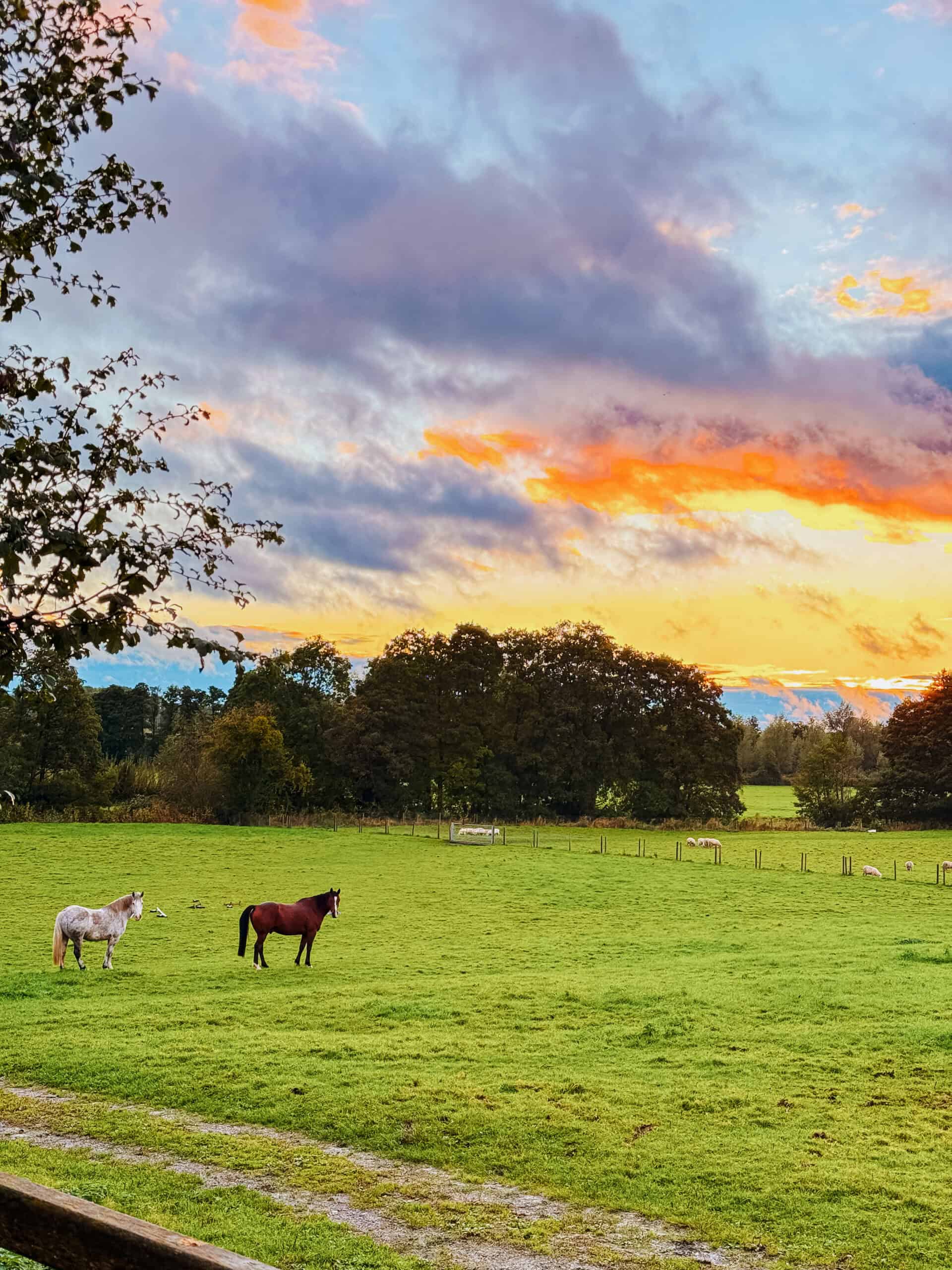
Quick facts:
Personally I had no issues. No blisters. No problems. I felt great everyday. And I know that is because I trained. And the training was fun! I also had these hiking boots which I highly recommend.
While you can walk the trail year-round, spring and autumn are pure magic.
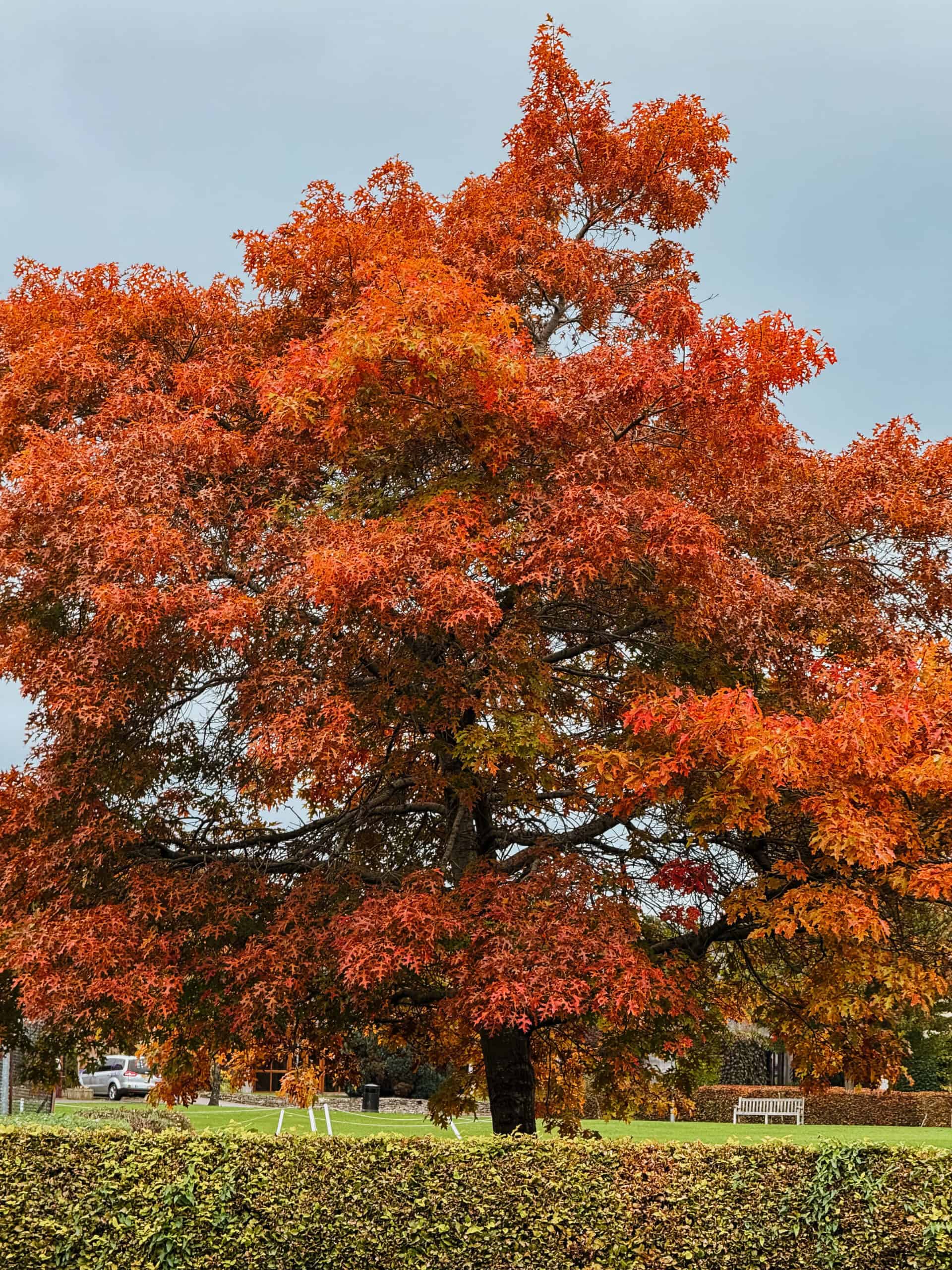
I walked in early October, and it felt like the landscape had turned into a painting—golden fields, rusty red trees, and soft mist hanging over the hills each morning.
Packing wisely makes a huge difference. You don’t need a giant pack weighing you down, but you do need a few essentials:
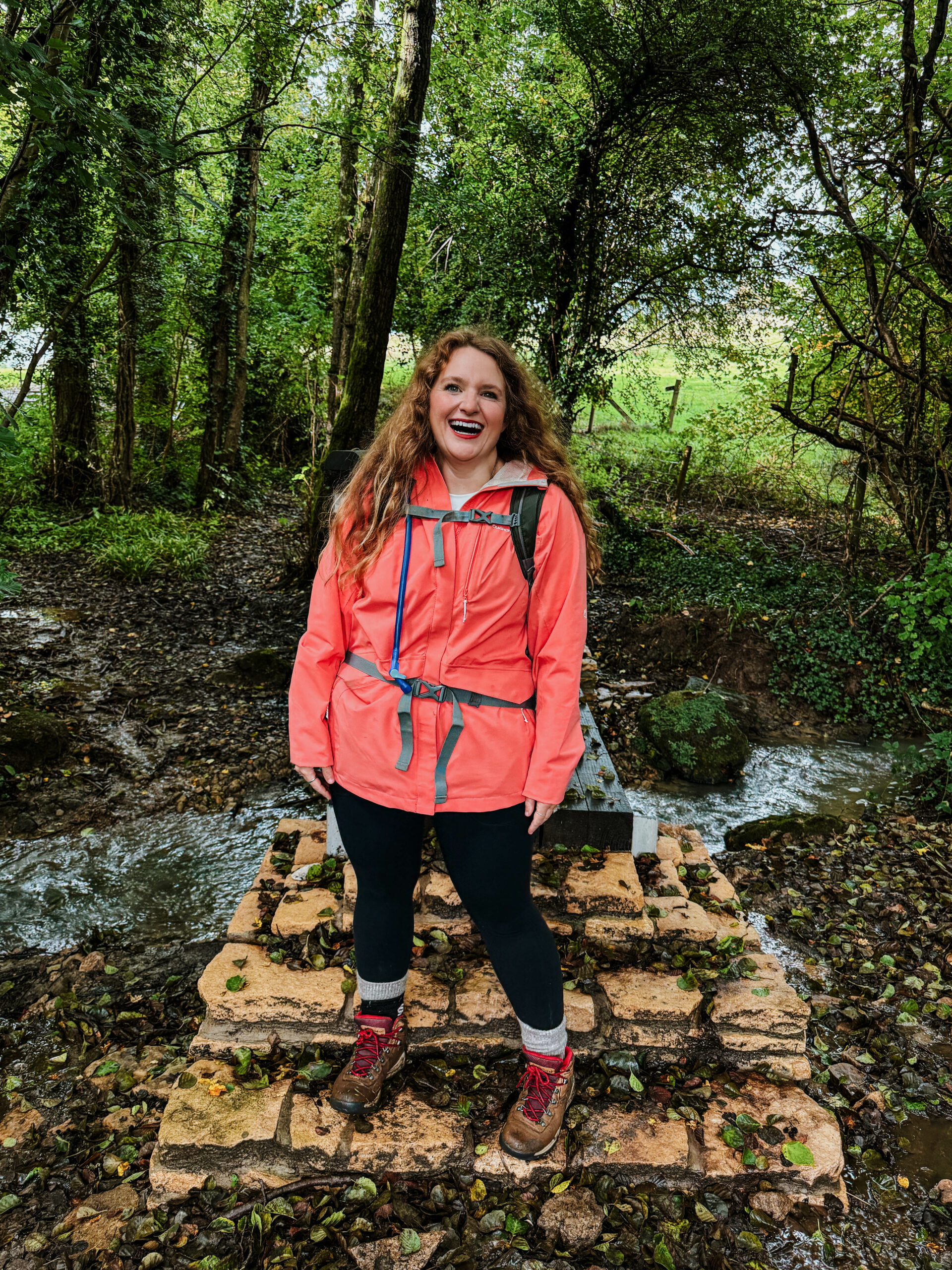
Everything I recommend to hike with here.
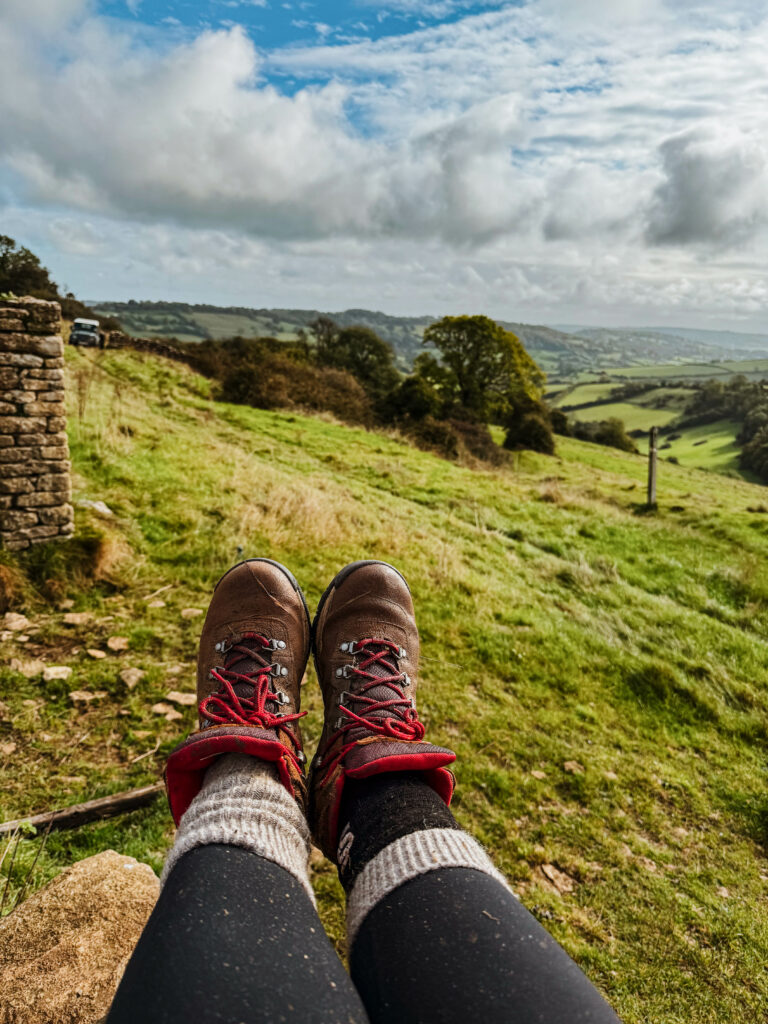
If you use a luggage transfer service, you’ll only need to carry your day essentials, which makes the walk much easier and more enjoyable. I detail out all the luggage transfer services and places I stayed along the way here.
There’s something so rewarding about finishing a long walking day and checking into a cozy inn or B&B.
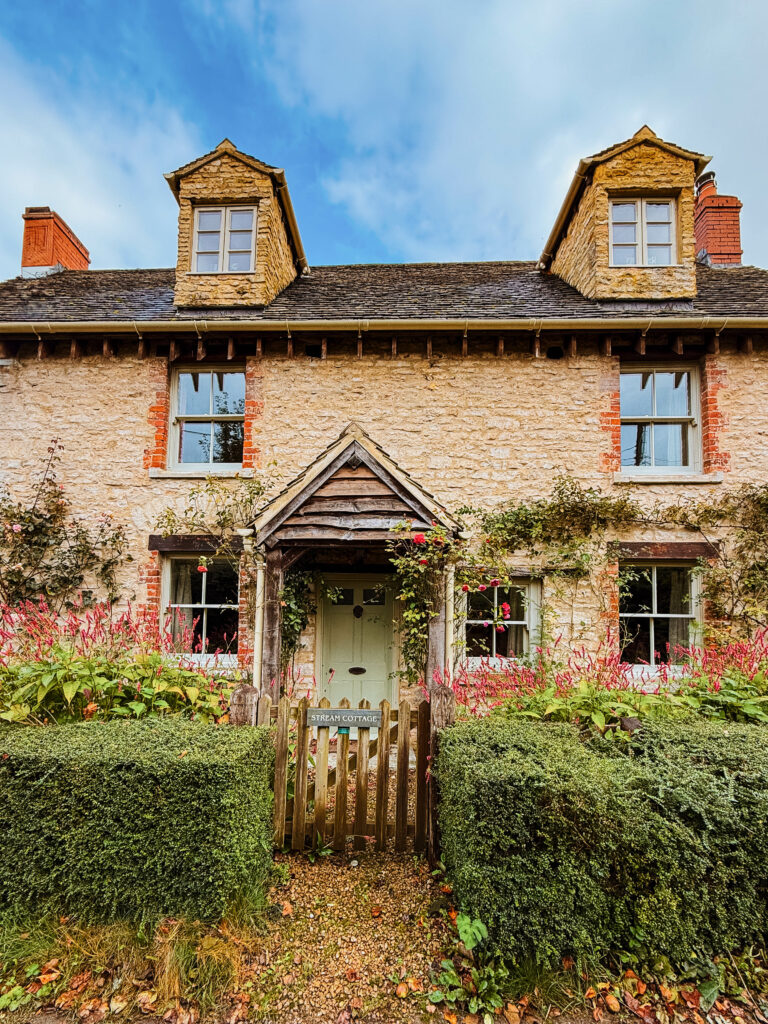
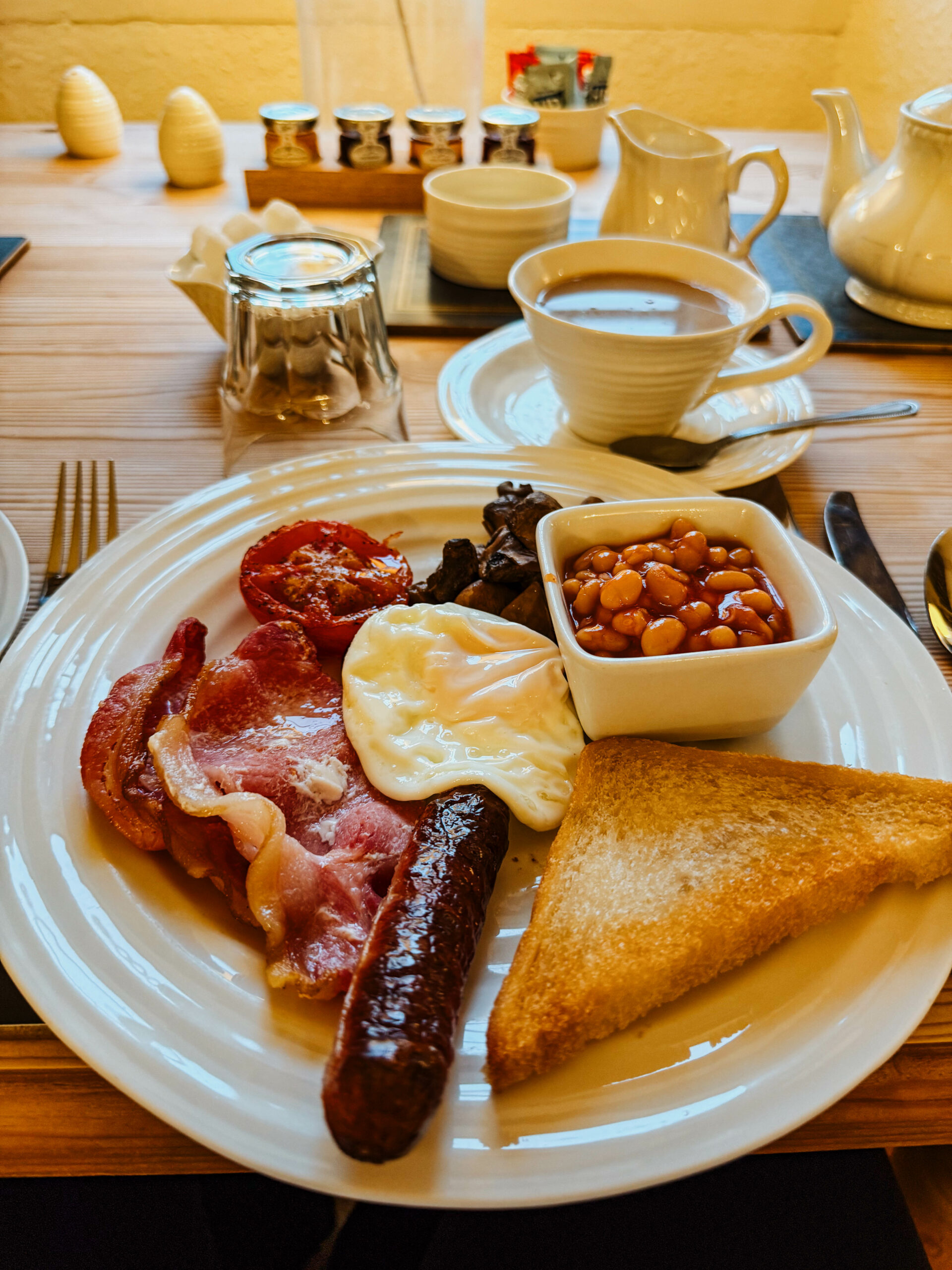
Accommodation options along the trail include:
I list every single place I stayed here!
Important tip: Book early, especially in peak seasons! Some of the smaller villages have very limited accommodation options.
My Video Diary of Walking the Cotswold Way
I catalogued my journey of walking the Cotswold Way on Instagram so you can see what each day was really like!
Here’s a quick look at how I broke down my walk. (Full details are in my paid guide!) See my favorite villages in the Cotswolds, here!
Highlight: Climbing up to Broadway Tower with panoramic views across Worcestershire and the Malverns.
Highlight: Exploring the charming town of Winchcombe, with its medieval streets and nearby Sudeley Castle.
Highlight: Walking along the dramatic escarpment with sweeping views and arriving in the spa town of Cheltenham.
Highlight: Quiet countryside trails leading to Crickley Hill, an ancient hillfort with breathtaking views.
Highlight: Seeing the famous 99 yew trees at St Mary’s Church in the “Queen of the Cotswolds.”
Highlight: Walking through sun-dappled woodlands and arriving at a historic hotel mentioned in the Domesday Book.
Highlight: Climbing to the Tyndale Monument and soaking up some of the best views of the walk.
Highlight: Crossing remote farmland and passing ancient drovers’ ponds—plus a cozy pub dinner at day’s end.
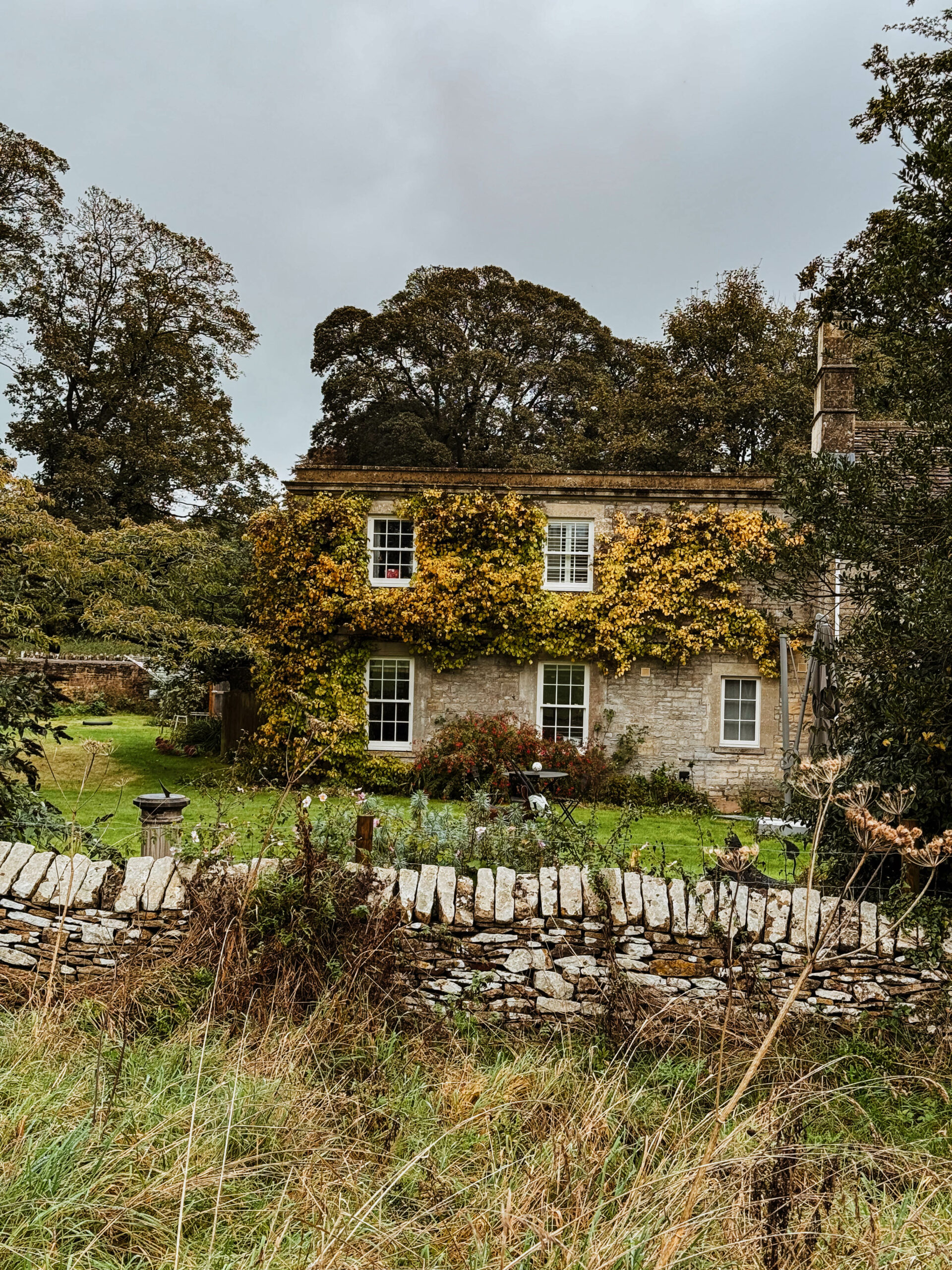
Highlight: Reaching Horton Court, a stunning medieval manor (and filming location for many period dramas).
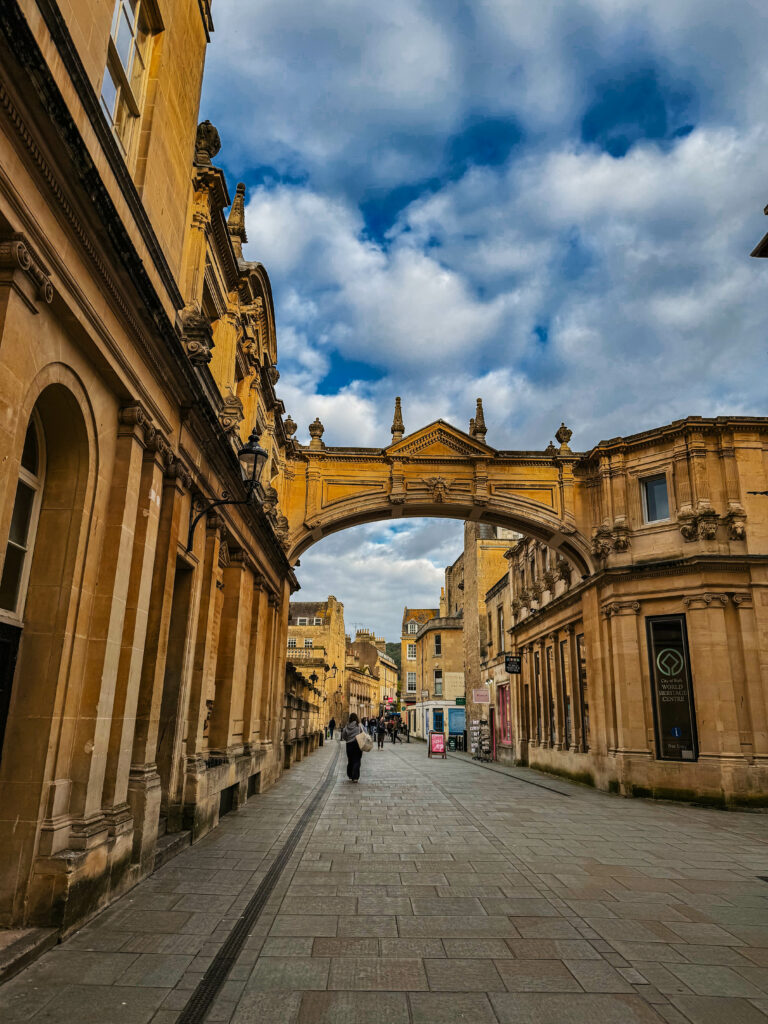
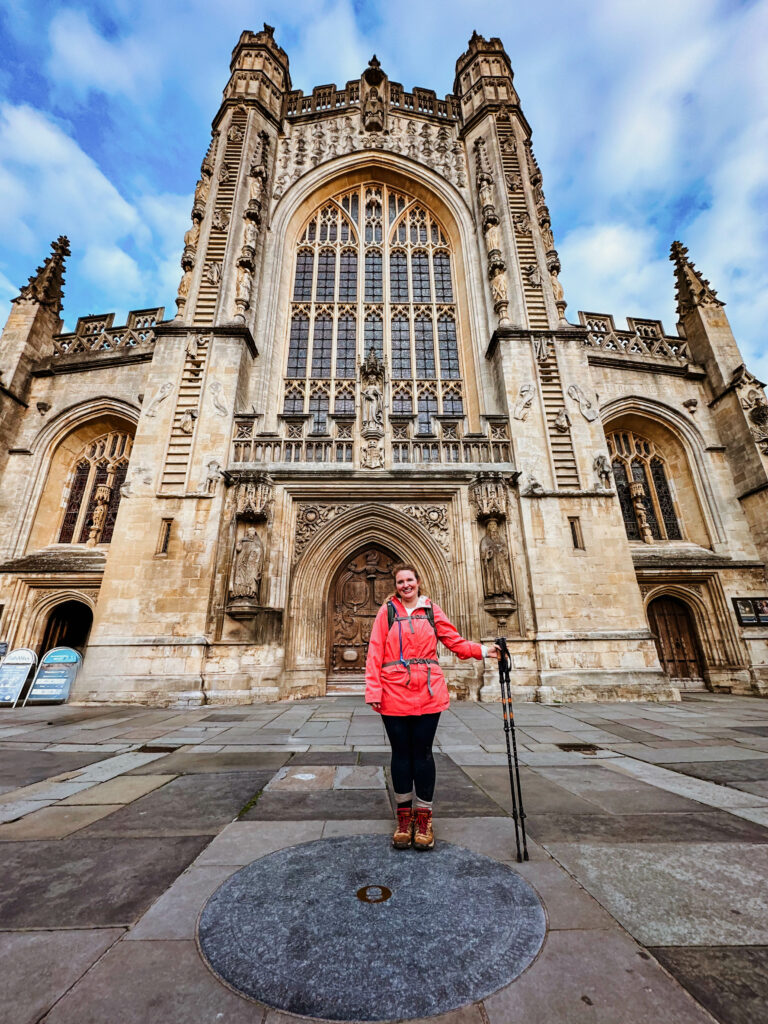
Highlight: The grand arrival into Bath, walking past the Royal Crescent and feeling like you’ve stepped into a Jane Austen novel.
Planning to walk the Cotswold Way in 2026? Here are a few updates to keep in mind:
🗓️ Events: The Cotswold Way Relay continues annually and may impact certain trail sections in June. A fun event
🛤️ Route Diversions: A few temporary and permanent trail diversions remain in place near areas like North Nibley, Tormarton, and Farfield Dursley. Always check the National Trails website before you walk for the most up-to-date route info.
🥾 Trail Surface Improvements: Several sections have been resurfaced to improve drainage, especially in previously muddy areas like Haresfield Beacon and Standish Woods.
📱 Navigation: While the trail is well-marked, summer overgrowth can hide signs—download a GPX file or use an app like OS Maps or AllTrails as a backup.
🛏️ Accommodation: With the Cotswold Way growing in popularity, many inns and B&Bs are booking up early for 2026—especially in towns like Winchcombe and Painswick. Book 3–6 months ahead when possible. to witness—or avoid if you prefer a quieter walk!
👉 For the most reliable trail information, maps, and seasonal updates, visit the official Cotswold Way page on National Trails
Walking the Cotswold Way isn’t just about covering miles. It’s about walking through layers of time, through stories written into the hills and stones. It’s about finding stillness in a noisy world, connecting to something bigger, slower, and somehow more real.
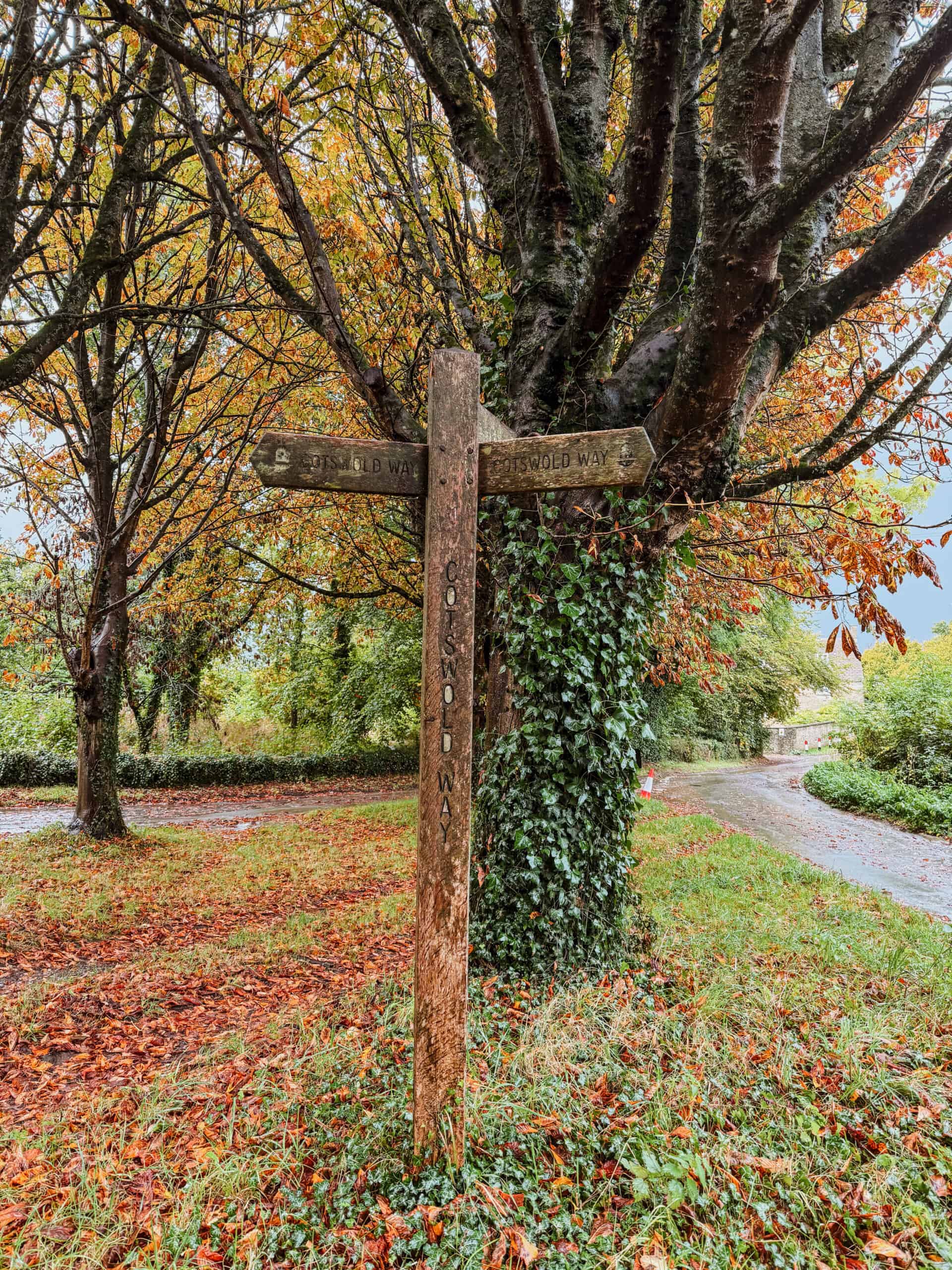
If you dream of a trip filled with beauty, history, and a good bit of muddy adventure, this is your sign.
And if you’d like even more help (like my detailed step-by-step itinerary, hotel and restaurant picks, packing lists, GPS downloads, and real-world advice), grab my paid guide here. It’s like having a friendly trail buddy right in your pocket.
Hope to see you on the trail.
The post Walking the Cotswold Way Full Guide: Everything You Need to Know appeared first on Helene in Between.
I don’t think I’ll ever forget the feeling of standing at the start of the Cotswold Way in the golden village of Chipping Campden. Early morning mist hugged the rooftops, and for a moment, the whole world felt hushed—like it was holding its breath right along with me.
Could I really walk 100 miles across England’s countryside? Was I ready for the hills, the rain, the blisters?
I was nervous. But as I tightened the straps on my backpack and took those first steps past the old market hall, something shifted. I wasn’t just starting a walk; I was stepping into a story—a winding path through history, nature, and, truthfully, myself.
P.S. my favorite places in the Cotswolds are here!
Over the next ten days, I wandered through ancient woodlands, climbed up to sweeping escarpments with views that made me stop in my tracks, and ended each day in villages so charming it almost felt like I had wandered onto a movie set. There were tough climbs and muddy boots, yes, but also those quiet, golden moments that stitched themselves into my memory: a deer darting through a misty field, the clink of a pub doorbell as I stumbled in for a much-needed pint, a local pointing me down an overgrown path with a smile and a “You’ll love this bit.”
Walking the Cotswold Way was so much more than just a hike. It was a journey—and one I’ll treasure for the rest of my life.
If you’re dreaming of taking on this trail, whether next month or “one day,” this is your friendly guide to what it’s really like to walk the Cotswold Way. (And if you want every step mapped out, with my full daily itinerary, hotel recommendations, and insider tips, you can check out my detailed guide here!
As of now people are already booking accomodation early for 2026 so it’s time to get on it!
The Cotswold Way is a National Trail in southwest England that runs about 102 miles (164 km) from Chipping Campden to Bath.
The Cotswold Way is one of the official National Trails in the UK—a collection of long-distance paths specially designated for their natural beauty, cultural importance, and historical significance.
It travels through the Cotswolds Area of Outstanding Natural Beauty, famous for its rolling hills, ancient stone villages, sheep-dotted fields, and storybook scenery. Along the way, you’ll pass castles, battlefields, Neolithic burial grounds, and landscapes that look almost too beautiful to be real.
The Cotswold Way isn’t about speed; it’s about soaking it all in, one footstep at a time.
It feels like walking through a story book!
In May 2024 I decided to walk the Cotswold Way.
Not to be dramatic here but it changed my life.
I was living in Oxford, England and was feeling stressed and overweight. I told my husband and he made me a detailed 4 month training plan. I started training and eating healthy. I fell in LOVE with walking. I lost 30 pounds before the hike and discovered a deep love of the countryside and walking.
Here’s the exact training program I followed.
This training isn’t easy, it’s demanding. But it made the walk itself so so so wonderful. I actually ended up walking 131 miles because I did all the extra side trips because I felt SO good.
Most people take between 7 and 10 days to complete the trail, though ultra-marathon types might tackle it faster.
👉 If you want to enjoy the journey—stopping for cream teas, castle visits, and long pub lunches—I highly recommend giving yourself around 10 days.
How long it takes to walk the Cotswold Way really depends on two things: how much you want to walk each day, and how much you want to explore beyond the trail itself.
Most people complete the Cotswold Way in 7 to 10 days.
I chose the slower, savor-everything route and walked the Cotswold Way over 10 days. And while the official trail itself is 102 miles, by the end of my journey, my GPS tracker showed that I had walked 131 miles total!
Why the extra miles?
Well, one of the best parts of walking the Cotswold Way is that you’re never far from something worth detouring for. I ended up taking side trips to explore castles, historic sites, hilltop monuments, and of course, charming villages slightly off the main trail. I couldn’t resist visiting places like Sudeley Castle in Winchcombe and Horton Court, a beautiful medieval manor house—and every extra step was absolutely worth it.
A few things that added miles for me:
So while the official distance is just over 100 miles, it’s good to plan for a little extra, especially if you’re anything like me and can’t resist a good side quest.
My advice:
And honestly? Those extra miles ended up being some of the most magical parts of my trip.
Trust me: your feet (and your soul) will thank you.
The Cotswold Way is rated moderate. It’s not a technical trail—no scrambling or mountaineering required—but it’s hillier than you might expect.
Each day brings a mix of steep climbs, gentle fields, wooded paths, and the occasional rocky patch after rain. Some of those hills are no joke, but the good news? Every climb comes with a view worth the effort.
Quick facts:
Personally I had no issues. No blisters. No problems. I felt great everyday. And I know that is because I trained. And the training was fun! I also had these hiking boots which I highly recommend.
While you can walk the trail year-round, spring and autumn are pure magic.
I walked in early October, and it felt like the landscape had turned into a painting—golden fields, rusty red trees, and soft mist hanging over the hills each morning.
Packing wisely makes a huge difference. You don’t need a giant pack weighing you down, but you do need a few essentials:
Everything I recommend to hike with here.
If you use a luggage transfer service, you’ll only need to carry your day essentials, which makes the walk much easier and more enjoyable. I detail out all the luggage transfer services and places I stayed along the way here.
There’s something so rewarding about finishing a long walking day and checking into a cozy inn or B&B.
Accommodation options along the trail include:
I list every single place I stayed here!
Important tip: Book early, especially in peak seasons! Some of the smaller villages have very limited accommodation options.
My Video Diary of Walking the Cotswold Way
I catalogued my journey of walking the Cotswold Way on Instagram so you can see what each day was really like!
Here’s a quick look at how I broke down my walk. (Full details are in my paid guide!) See my favorite villages in the Cotswolds, here!
Highlight: Climbing up to Broadway Tower with panoramic views across Worcestershire and the Malverns.
Highlight: Exploring the charming town of Winchcombe, with its medieval streets and nearby Sudeley Castle.
Highlight: Walking along the dramatic escarpment with sweeping views and arriving in the spa town of Cheltenham.
Highlight: Quiet countryside trails leading to Crickley Hill, an ancient hillfort with breathtaking views.
Highlight: Seeing the famous 99 yew trees at St Mary’s Church in the “Queen of the Cotswolds.”
Highlight: Walking through sun-dappled woodlands and arriving at a historic hotel mentioned in the Domesday Book.
Highlight: Climbing to the Tyndale Monument and soaking up some of the best views of the walk.
Highlight: Crossing remote farmland and passing ancient drovers’ ponds—plus a cozy pub dinner at day’s end.
Highlight: Reaching Horton Court, a stunning medieval manor (and filming location for many period dramas).
Highlight: The grand arrival into Bath, walking past the Royal Crescent and feeling like you’ve stepped into a Jane Austen novel.
Planning to walk the Cotswold Way in 2026? Here are a few updates to keep in mind:
🗓️ Events: The Cotswold Way Relay continues annually and may impact certain trail sections in June. A fun event
🛤️ Route Diversions: A few temporary and permanent trail diversions remain in place near areas like North Nibley, Tormarton, and Farfield Dursley. Always check the National Trails website before you walk for the most up-to-date route info.
🥾 Trail Surface Improvements: Several sections have been resurfaced to improve drainage, especially in previously muddy areas like Haresfield Beacon and Standish Woods.
📱 Navigation: While the trail is well-marked, summer overgrowth can hide signs—download a GPX file or use an app like OS Maps or AllTrails as a backup.
🛏️ Accommodation: With the Cotswold Way growing in popularity, many inns and B&Bs are booking up early for 2026—especially in towns like Winchcombe and Painswick. Book 3–6 months ahead when possible. to witness—or avoid if you prefer a quieter walk!
👉 For the most reliable trail information, maps, and seasonal updates, visit the official Cotswold Way page on National Trails
Walking the Cotswold Way isn’t just about covering miles. It’s about walking through layers of time, through stories written into the hills and stones. It’s about finding stillness in a noisy world, connecting to something bigger, slower, and somehow more real.
If you dream of a trip filled with beauty, history, and a good bit of muddy adventure, this is your sign.
And if you’d like even more help (like my detailed step-by-step itinerary, hotel and restaurant picks, packing lists, GPS downloads, and real-world advice), grab my paid guide here. It’s like having a friendly trail buddy right in your pocket.
Hope to see you on the trail.
The post Walking the Cotswold Way Full Guide: Everything You Need to Know appeared first on Helene in Between.

Hi all.
It’s always sweet to come back to this space. It’s a little different this time around, and I’ve cleaned house a bit, but it’s still the same “home” I’ve had online for years.
For those that might be new (or ones who haven’t seen me online lately), here’s a reintroduction:
Tom and I are going on 13 happy years of marriage this spring. Still so in love. Still laughing every day. I still sass him as much as possible. He loves his career and has continued to provide so well for our family.
Silas is in 2nd grade and loves learning all the things. He is curious, careful, and sensitive. He has become our walking fact-book on all sorts of things and it’s been a joy to watch him grow and be in his world.
Ike will start kindergarten this fall. He is imaginative and sassy, and makes us all laugh daily. He is in his own little world most of the time but we are invited in if we’re prepared to play a needed character – ha!
After 8 wonderful years in Nashville, we’ve decided to take a leap into the unknown (cue the Frozen song).

We are selling our home, most of our possessions and our cars, and trading them in for a 46’ fifth wheel and F450 truck. None of this decision came from a disdain of Nashville – quite the contrary! It’s going to be extremely difficult to leave a place and people we love so dearly. We are leaving on a high point here, and though that’s hard, it will leave us with much fondness thinking of our time in Nashville. This city healed us in so many ways after a difficult season in Georgia, and I’ll never forget it. It’s truly a place that will always feel like home.
How did we come to this decision? Well. Let me break it down for you, because it truly was a domino effect that led to this.
It sounds odd to start with, but when our Hondo-boy (our beloved dog, for those that didn’t know him) died last January, our ability to travel opened up. We didn’t need to have care for him or try and bring him along and find dog-friendly stays, etc… we could just… go.
Fast forward to a tent-camping trip with family in Iowa. We had a great time and funny memories over the course of a few days, but it led to some conversations on the way home about how our family could camp more often in the future. We thought of all the ways: tenting, pop-up campers, pull-behind trailers, etc… and finally agreed (FINALLY! I’d been wanting it for years) to try a travel trailer.

We didn’t know how this would go. Tom never having towed something like this before, working together for set-ups and tear downs, etc… but to everyone’s surprise, it was easy. Tom and I were a great team, our kids explored more and had more freedom and space, Tom was a secret pro at towing and backing up, and I was the version of myself my family had never really seen – outdoorsy! Over the course of about three months, we took it out five times. Which is a lot for most owners of a camper. Tom was surprised to see how un-fussed I was over bugs and messes and he had never seen me enjoy nature so much. I told him it was because of the creature comforts – ha – putting up with those things was easy when, at the end of the day, I had my own cozy bed, a nice bathroom, a safe place for the boys, and our own coffee in some AC.
Then the next domino.
Silas started going to a 2 day/week homeschool tutorial. It has been wonderful and worth the 40+ minute drive one-way, but… for the next 6 years? Conversations started cropping up. Should we move across town to be closer to the school and our church community? We want some land. Can we afford it? Would we have to move far away from the places in Nashville we love? If we are starting over in a new community, why wouldn’t we just do that near family? Who would we live by, though? I can’t picture having teens in Nashville. Where would we move?? What can we afford?
These questions led to all sorts of things. Tom started looking for a higher paying job to afford a potential move. We started looking at the places where our family lived and tried to narrow down if any of those places matched our family’s culture.
The closest match? Rapid City, South Dakota.
Why? Well. It hit the most pros. Near my sister and her family. Near one of Tom’s closest college friends (who are friends to both of us!). Near my parents, my brother nearest in age to me whose kids are the same ages as ours, and with access to the places out West we haven’t visited together.
So, we took the camper out over fall break and “lived” there for 2 weeks. We spent time with family and friends, we explored the area towns and forests and hills, and really prayed and considered how this would be for us.
During the drive home, as we discussed all our thoughts and how much we enjoyed our time there, Tom blurted out, “Maybe we aren’t in love with Rapid City. Maybe… it was the camping. What if we… full-timed?”
We sat with that for a while. It had caught me off-guard. Not because I couldn’t imagine that, or even that I hadn’t had the thought too, but that we both thought it. And it made sense. Tom works from home. I stay home. We homeschool our kids. If anyone could do it, we could, right?
For a few weeks, we mulled it over. Nashville started feeling louder, now more than ever—more crowded, more people, more… everything. We’d come back from camping and feel like part of us didn’t belong anymore. Why did it it suddenly feel like we had an overwhelming amount of stuff?
When we’d camp, our boys became more confident—more alive. We started to long for our boys to have space and longer leashes. We realized that living in a city has led to keeping them close all the time… stranger danger, watch for cars, stay where I can see you at all times. Living in a city they never get to be “off leash”. They don’t have the chance to explore, to be free. Camping gave us a taste of the simpler, small-town versions of ourselves that had been buried by city-living. We longed for less.
So. We decided to leap. We prayed about it, talked to family that have full-timed before, and started to feel like there was nothing to lose. When we finally landed on the decision, we even booked a trip to Tampa for the RV Supershow to help us narrow down our next “home.” Now that we’ve decided on that (more on our RV later!!), the rest of the dominoes have begun to fall. We are talking to realtors, fixing up things around our house, donating, selling, planning routes, while also still trying to balance daily life and keeping up with school, work, and a house.
The goal is to finish out the school year here in Nashville, and hit the road in May. We’ll travel for a year (or more) and end up around Rapid City, SD on some land in the hills (we hope!). There is a TON to do between now and then, but I want to keep the lines of communication open with the people in our lives. Many of the people we’ve told have come at us with so much excitement and a desire to help connect us with some of their favorite people and places around the country – and we are here for it! Tell us who to meet and what we should see (click the button below)!
We are so excited for a year+ of adventure, learning, and connecting with people from all over. We hope to be a blessing to the churches we visit, the campgrounds we stay at, and be a light for Jesus to all we meet. There will absolutely be some high highs and low lows, but God is with us through it all and we will take it all as it comes. Keep us in your prayers and please never hesitate to reach out to chat, share some knowledge, ask a question, or just say hey.
And if you want to buy a house in Nashville, a truck, a travel trailer, or a Tesla… you know who to call 😉

 Stay home, stay warm, stay safe, stay cozy, stay presentable.
The post High/Low Outfit: Hibernation appeared first on Primer.


This is hands down the best lentil soup recipe—and once you try it, you’ll see why. It’s cozy, nourishing, full of rich flavor, and incredibly easy to make, even on a busy weeknight.
This healthy lentil soup is also one of the most affordable meals you can make. For about $10, you’ll have a big pot of soup that feeds 6–8 people, making it perfect for meal prep, family dinners, or freezing for later.
With simple pantry ingredients and minimal prep, this easy lentil soup recipe comes together quickly on the stovetop (or in a slow cooker). It’s naturally high in plant-based protein, fiber, and essential vitamins, so it’s filling, satisfying, and genuinely good for you.
If you’re new to lentils, this is the recipe that will convert you.

Lentil soup is so flexible and can be made in a huge variety of ways. While I prefer to make this soup on the stovetop to bring out each ingredient’s flavor while sauteing, you can just throw it all in a slow-cooker and come home to a great meal.
Lentils are legumes, similar to beans, peanuts, and soybeans. They’re technically a “pulse,” meaning the dried edible seed of a legume plant. Lentils cook faster than most beans, don’t require soaking, and are one of the easiest plant proteins to work with.
Base Ingredients
Flavor Boosters
Optional Add-Ins
See the full recipe in the printable recipe card below.
I love using small dark green lentils (French lentils) because they’re sturdy, cook quickly, and hold their shape beautifully.
That said, all lentils work well in this soup:
They’re all affordable, nutritious, and worth rotating depending on the texture you like.
Short answer: No, soaking is not required.
Lentils cook faster than most legumes and don’t need soaking to be digestible. I usually skip it.
That said, soaking can help if:
If you soak:
This can make lentils easier to digest for some people.
Yes — lentils are naturally gluten-free.
Just check the label to make sure they weren’t processed in a facility that handles gluten.

This lentil soup stores beautifully and tastes even better the next day as the flavors continue to develop.
This is one of the best recipes for meal prep; it’s hearty, filling, and holds up incredibly well.
This is exactly the kind of recipe that makes healthy eating feel easy.
I can’t wait to hear from you and how you like this recipe. Make sure to comment below and give it a star rating.

The post Easy Lentil Soup Recipe appeared first on Elizabeth Rider – Modern Healthy Living.


These Ground Turkey Stuffed Peppers are an easy, healthy dinner made with ground turkey, rice, crushed tomatoes, and melty cheese baked inside tender bell peppers. This family-friendly stuffed peppers recipe is ready in under an hour and perfect for meal prep or busy weeknights.
They’re cozy, satisfying, and endlessly customizable—one of those reliable dinners you’ll want on repeat.

Store leftovers in an airtight container in the fridge for 2–3 days. Reheat in the oven or microwave.
Do I have to boil the peppers first?
No—this no-boil method gives better flavor and texture with fewer steps. If you prefer, you can parboil them for 5 minutes, then turn them upside down to drain. They will cook faster in the oven, but we skip this step for fewer dishes and cleanup. Cooking them a little longer in the oven is enough to get the peppers soft.
What should I serve with stuffed peppers?
A simple green salad or cilantro lime slaw pairs perfectly.
Are turkey stuffed peppers healthy?
Yes! They’re packed with lean protein, veggies, and whole grains.
If you liked this stuffed pepper recipe, here are some more Mexican-inspired recipes to try next:
The post Ground Turkey Stuffed Peppers (Easy & Healthy!) appeared first on Elizabeth Rider – Modern Healthy Living.

These Ground Turkey Stuffed Peppers are an easy, healthy dinner made with ground turkey, rice, crushed tomatoes, and melty cheese baked inside tender bell peppers. This family-friendly stuffed peppers recipe is ready in under an hour and perfect for meal prep or busy weeknights.
They’re cozy, satisfying, and endlessly customizable—one of those reliable dinners you’ll want on repeat.
Store leftovers in an airtight container in the fridge for 2–3 days. Reheat in the oven or microwave.
Do I have to boil the peppers first?
No—this no-boil method gives better flavor and texture with fewer steps. If you prefer, you can parboil them for 5 minutes, then turn them upside down to drain. They will cook faster in the oven, but we skip this step for fewer dishes and cleanup. Cooking them a little longer in the oven is enough to get the peppers soft.
What should I serve with stuffed peppers?
A simple green salad or cilantro lime slaw pairs perfectly.
Are turkey stuffed peppers healthy?
Yes! They’re packed with lean protein, veggies, and whole grains.
If you liked this stuffed pepper recipe, here are some more Mexican-inspired recipes to try next:
The post Ground Turkey Stuffed Peppers (Easy & Healthy!) appeared first on Elizabeth Rider – Modern Healthy Living.


Need something quick, easy, and healthy to grab on your way out the door?
Meet the Homemade Lunchable, your new favorite no-stress lunch.
It’s nostalgic, totally customizable, and perfect for meal prep. Even better? You can make most of it without turning on the stove. These little bento-style lunches keep well in the fridge for days, give you real variety, and somehow make lunch feel fun again.
Kids love them. Adults rely on them.
To build a balanced lunchable, aim for:
Here are some easy ingredient ideas to get you started.
For fruits and vegetables, go big on fresh, colorful options:
For proteins, choose something satisfying that holds up well in the fridge:
For cheese, simple slices or cubes work best:
For something crunchy or starchy, pick one you actually look forward to eating:
For dips, fats, and a little something sweet, add one or two extras:

You’ll want containers that keep everything neat and easy to grab. Use divided bento-style boxes or small reusable containers with tight-fitting lids. Glass divided containers are especially great because they keep food fresh and don’t hold onto odors.
I bought these divided glass containers on Amazon, and these would be a good option, too.
.Want more ideas? Check out these 34+ ideas for healthy meal prep.
Putting these together is fast and flexible:
That’s it. No cooking required unless you want to hard-boil eggs or roast chickpeas.
Here’s what makes Homemade Lunchables such a game-changer:
Once you start making these, you’ll wonder why you ever settled for anything else.

Once assembled, these lunchables stay fresh in the fridge for:
Grab one as you head out the door, and lunch is done.
The post Homemade Lunchable Recipe appeared first on Elizabeth Rider – Modern Healthy Living.


