Author: admin

  • Does Hoisin Sauce Go Bad? Shelf Life, Spoilage Signs & Storage Tips

    Does hoisin sauce go bad? Yes, hoisin sauce does go bad — and it spoils differently than most other Asian condiments in your fridge door. While fish sauce and soy sauce rely heavily on salt for preservation, hoisin sauce is loaded with sugar. That sugar gives it the rich, sweet-savory flavor it is famous for. It also makes it a better environment for mold and bacteria once the bottle is opened.

    Most people buy hoisin for a single recipe — spring rolls, Peking duck, a quick stir-fry — and then forget it in the back of the fridge for months. Sound familiar? This guide covers exactly how long it lasts, the spoilage signs that are easy to miss, and how to store it so you are not throwing out half a jar every time.

    For a complete reference on storing condiments and pantry staples, see our Food Storage Guide. For the refrigeration question specifically, see our companion post: Does Hoisin Sauce Need to Be Refrigerated?

    ⚡ Short answer: Yes, hoisin sauce goes bad. Unopened, it stays at peak quality for 18 to 24 months in the pantry. Once opened and refrigerated, expect 6 to 18 months of good quality. The first spoilage sign most people miss: the sauce dries out and turns rubbery before mold ever appears. If yours has that thick, cracked texture — it is past its prime.

    📋 Key Takeaways

    • Hoisin sauce goes bad faster than fish sauce or soy sauce — its high sugar content makes it more vulnerable to mold once opened.
    • Unopened: 18 to 24 months in the pantry; often fine for months past the best-by date.
    • Opened and refrigerated: peak quality for 6 to 12 months, usable up to 18 months.
    • The spoilage sign most people miss: rubber-like texture and dried-out edges — this happens before visible mold.
    • Separation and color darkening are normal — give it a stir and it is fine.
    • Best-by dates are quality indicators, not safety deadlines.

    🤔 Why Hoisin Sauce Goes Bad Differently Than Other Asian Condiments

    This is the part nobody explains. And it matters for knowing what to look for.

    Fish sauce is roughly 20 to 30% salt by weight. Soy sauce is similarly salt-heavy. That salt creates an inhospitable environment for bacteria and mold, which is why both can survive for years at room temperature after opening without obvious spoilage.

    Hoisin is a different animal. Its base is fermented soybean paste, but it also contains significant amounts of sugar, vinegar, garlic, and sesame oil. The vinegar and fermentation provide some preservation, but the sugar creates conditions where mold can take hold — especially at room temperature.

    💡 The sugar factor: High sugar content reduces water activity, which slows bacterial growth — but hoisin has enough moisture that mold can still develop, especially if the jar is left warm or contaminated with food particles. Refrigeration is not optional once the jar is opened.

    The fermented soybean base is also worth noting. Some people mistake the normal slightly funky smell of hoisin for spoilage. It should smell deeply savory, sweet, and mildly pungent — think soy sauce meets molasses. If it smells sour, sharp, or yeasty in a bad way, that is a different story.

    🕓 How Long Does Hoisin Sauce Last?

    Storage Method How Long It Lasts
    Unopened — Pantry 18 to 24 months (check label); often fine past best-by
    Opened — Refrigerated (peak quality) 6 to 12 months
    Opened — Refrigerated (still usable) Up to 18 months if no spoilage signs
    Opened — Room Temperature A few weeks at best; quality drops fast
    Past Best-By Date (unopened, stored properly) Often still good — check for spoilage signs

    According to the USDA FoodKeeper app, hoisin sauce keeps best quality for several months once opened and refrigerated. The USDA FSIS confirms that best-by dates on shelf-stable products reflect peak quality, not a safety deadline. An unopened bottle in a cool, dark pantry can often be used well past its printed date if it shows no spoilage signs.

    🔍 How to Tell If Hoisin Sauce Has Gone Bad

    Fresh hoisin sauce is thick, dark brown, smooth, and glossy. It smells sweet, savory, and richly fermented. Here is what to look for when you are not sure.

    🔴 Signs It Has Gone Bad

    🧴 Rubbery or dried-out texture. This is the spoilage sign unique to hoisin — and the one most people miss. Because hoisin is thicker and stickier than other condiments, it can dry out and develop a rubbery, cracked, or leathery consistency before mold ever appears. If the sauce has lost its glossy flow and looks congealed or stiff, it is past its prime. Do not try to revive it with water — the flavor will have already degraded.

    🦠 Visible mold. Fuzzy white, green, or grey spots on the surface or around the cap or lid are a clear sign. Discard the entire jar — mold roots extend deeper than what is visible.

    👃 A sour, sharp, or fermented-off smell. Hoisin is supposed to smell rich and a little funky — that is normal. What is not normal is a sour or vinegary edge that was not there before, or a yeasty, fermented smell that catches in the back of your throat. Trust your nose on this one.

    Swollen lid or bottle. Any pressure buildup inside the jar indicates bacterial activity. Discard it immediately and do not taste test.

    🟢 Signs That Are Completely Normal

    Separation — darker liquid on top, paste at the bottom. Hoisin sauce separates over time as the heavier particles settle. This is identical to natural peanut butter separating in the jar. Give it a good stir before using and it will be as good as new.

    Darkening color. Like oyster sauce, hoisin naturally gets darker over time due to oxidation. Color change alone is not a spoilage sign — smell and texture tell the real story.

    Slightly stronger flavor. The fermented notes may intensify with age. If it still smells right and looks right, use it. If the flavor is so strong it is unpleasant in a dish, that is a quality issue rather than a safety one.

    🎯 The check: Open the jar. Stir it. Smell it. If it looks glossy and pours smoothly, smells deeply savory-sweet, and has no mold — it is fine. Rubbery texture or a sour smell means it is time to replace it.

    ⚡ What Affects How Long Hoisin Sauce Lasts?

    Temperature — the biggest factor. Hoisin stored at room temperature after opening degrades significantly faster than refrigerated hoisin. The sugar content that makes it delicious also makes it more susceptible to microbial activity at warmer temperatures.

    Lid hygiene. Wiping the jar lip before sealing keeps dried sauce residue from becoming a mold entry point around the cap. It takes two seconds and makes a real difference over months of storage.

    Contamination from utensils. Dipping a used spoon directly into the jar introduces food particles and bacteria. Pour into a small dish for dipping rather than double-dipping back into the jar.

    Brand and preservative content. Some commercial hoisin sauces contain sodium benzoate or acetic acid as preservatives, which meaningfully extend shelf life. Lee Kum Kee and Kikkoman formulations tend to keep longer than smaller-batch brands. Check the label — if yours contains preservatives, it will likely outlast the conservative estimates above.

    🧊 How to Store Hoisin Sauce Properly

    • Unopened: cool, dark pantry away from the stove or dishwasher. No refrigeration needed.
    • Opened: refrigerate immediately. This is the single most important step.
    • Middle shelf, not the door. Door shelves experience more temperature swings — consistent cold is key.
    • Seal tightly after every use. Oxygen is the main driver of quality loss and drying.
    • Wipe the jar neck clean before sealing to prevent residue buildup around the lid.
    • Pour into a dish rather than dipping directly from the jar to prevent contamination.
    • Note the opening date on the lid with a marker — saves guesswork six months later.

    🍜 Using Hoisin Sauce? Try These Recipes

    Hoisin is one of those sauces that works as a glaze, a dipping sauce, a stir-fry base, and a marinade all at once. If you have a fresh jar and need inspiration:

    ❓ Frequently Asked Questions

    How long does hoisin sauce last after opening?

    Opened hoisin sauce refrigerated and tightly sealed stays at peak quality for 6 to 12 months. Many bottles remain usable up to 18 months if stored properly and show no spoilage signs. At room temperature after opening, quality drops within weeks.

    Can you use hoisin sauce past its expiration date?

    Yes, if the bottle is unopened and stored properly in a cool, dark pantry, hoisin sauce is often still good for months past its best-by date. The USDA FSIS confirms best-by dates indicate peak quality, not safety. For opened hoisin, rely on spoilage signs — texture, smell, and mold — rather than the date alone.

    What does bad hoisin sauce look like?

    Bad hoisin sauce may show visible mold (fuzzy spots on the surface or around the cap), a rubbery or dried-out texture where it has lost its smooth glossy consistency, or a darker, duller color than normal. Separation alone is not a spoilage sign — stir it and see if it smooths out.

    Does hoisin sauce smell sour when it goes bad?

    Yes. Fresh hoisin has a rich, sweet-savory, fermented aroma. When it begins to spoil, it develops a sharp sour edge or an unpleasant yeasty smell that is distinctly different from its normal scent. If the smell has changed noticeably, discard it.

    Is it okay if hoisin sauce has separated in the jar?

    Yes, separation is completely normal. The heavier particles settle to the bottom over time, leaving a darker liquid layer on top. This is the same as natural peanut butter separating. Stir well before using and the sauce will blend back together.

    Does hoisin sauce need to be refrigerated after opening?

    Yes. Unlike fish sauce or soy sauce, hoisin’s high sugar content makes it more vulnerable to mold and bacteria at room temperature. Refrigeration significantly extends quality and shelf life. See the full breakdown in our companion guide: Does Hoisin Sauce Need to Be Refrigerated?


    📚 Further Reading

    Sources

    The post Does Hoisin Sauce Go Bad? Shelf Life, Spoilage Signs & Storage Tips appeared first on Better Living.

  • Does Oyster Sauce Need to Be Refrigerated?

    Does oyster sauce need to be refrigerated? Unopened, no. Once opened, yes — and the reason matters. Oyster sauce is thickened with cornstarch, which gives it that glossy, rich texture. Unlike fish sauce or soy sauce, which are preserved almost entirely by salt, that starch content makes opened oyster sauce noticeably more vulnerable to quality loss and spoilage at room temperature.

    You have probably seen oyster sauce sitting on unrefrigerated shelves at Asian grocery stores and even on restaurant tables. That is fine when the bottle is sealed. The moment you break that seal, the rules change.

    For a complete reference on storing common condiments and pantry staples, see our Food Storage Guide. This post covers the refrigeration question for oyster sauce specifically — before and after opening, what the major brands say, and what actually happens if you leave it out.

    The short answer: Unopened oyster sauce does not need to be refrigerated. Store it in a cool, dark pantry. Once opened, refrigerate it. Most major brands print “refrigerate after opening” on the label for good reason — the cornstarch and oyster extract degrade significantly faster at room temperature. Refrigerated and sealed, opened oyster sauce keeps peak quality for 3 to 6 months and is often still usable up to 12 months.

    📋 Key Takeaways

    • Unopened oyster sauce: no refrigeration needed. Cool, dark pantry is fine for up to 18 to 24 months.
    • Opened oyster sauce: refrigerate immediately. Quality drops fast at room temperature.
    • Why it matters: cornstarch thickener and oyster extract break down faster than salt-only condiments.
    • Most brands agree: Kikkoman, Maekrua, and Lee Kum Kee all recommend refrigerating after opening.
    • Left it out by accident? A few hours is fine. A few days, check for signs of spoilage before using.

    🧊 Before vs. After Opening: Two Different Rules

    The confusion around oyster sauce refrigeration almost always comes from the same place: people see it stored at room temperature before purchase and assume it works the same way at home. Here is why that logic breaks down.

    📦 Unopened Oyster Sauce — No Refrigeration Needed

    An unopened bottle of oyster sauce is commercially sealed and shelf-stable. The cooking and caramelization process used to make it, combined with its salt and sugar content, keeps it stable at room temperature for 18 to 24 months. Store it in a cool, dark pantry away from direct sunlight and heat sources like the stove or dishwasher. The label’s best-by date is your reference point, but according to the USDA FSIS, best-by dates on shelf-stable products indicate peak quality, not a safety cutoff.

    🍫 Opened Oyster Sauce — Refrigerate It

    Once opened, the dynamic changes. Oyster sauce is thickened with cornstarch, and that starch begins breaking down with exposure to air, warmth, and moisture. The oyster extract itself is also more perishable than the salt-heavy base of fish sauce or soy sauce. Left at room temperature after opening, oyster sauce will start to oxidize, the flavor will weaken, and liquid separation will appear on the surface — usually within weeks rather than months.

    Refrigeration slows all of these processes significantly. The USDA FoodKeeper app recommends finishing opened oyster sauce within 3 to 6 months for best quality. Kept cold and sealed, many bottles stay usable up to 12 months.

    🏷 What the Major Brands Actually Say

    This is where oyster sauce gets more definitive than most condiments. The leading brands are largely aligned:

    Kikkoman states on their website that their oyster sauces should be refrigerated after opening to preserve quality.

    Maekrua labels their bottles with “refrigerate after opening” — no ambiguity.

    Lee Kum Kee, the most widely sold oyster sauce brand globally, recommends refrigeration after opening and notes the sauce keeps best quality for about 3 to 6 months refrigerated.

    Golden Dragon says refrigeration is recommended but not strictly necessary — the only major brand that leaves any wiggle room. Their position: cold temperatures extend quality life, but the sauce is stable enough to survive short periods at room temperature.

    The pattern: When most major brands print “refrigerate after opening” on the label, that is the closest thing to a consensus you will find in condiment storage. Follow the label.

    ⚠ What Happens If You Don’t Refrigerate Opened Oyster Sauce?


    Leaving opened oyster sauce at room temperature is not an immediate crisis. Here is the realistic timeline of what happens:

    A few hours: Completely fine. No meaningful change in quality or safety.

    A few days: Still likely fine. Minimal quality change if the cap was sealed and the sauce was stored away from heat and light.

    One to two weeks: Quality starts declining. Oxidation begins darkening the sauce and altering the flavor. Still probably safe but noticeably less fresh.

    One month or more: Liquid separation may appear on the surface. Flavor will be noticeably off. Mold risk increases. Check carefully before using — smell it first, then look for any surface changes.

    The FDA’s safe food handling guidelines recommend storing opened condiments containing perishable ingredients in the refrigerator to slow bacterial growth and preserve quality.

    🕓 Oyster Sauce Storage at a Glance

    Situation What to Do How Long It Lasts
    Unopened Cool, dark pantry 18 to 24 months
    Opened — Refrigerated Sealed on a middle fridge shelf 3 to 6 months peak, up to 12 months
    Opened — Room Temp Only if using within days 1 to 2 weeks before quality drops
    Opened — Past Best-By Check for spoilage signs before using Often still usable if refrigerated

    💡 Storage Tips That Actually Make a Difference

    • Middle shelf, not the door. Fridge doors experience more temperature swings than interior shelves. A consistent cold temperature preserves the sauce longer.
    • Seal tightly every time. Oxygen is the main driver of quality loss. A loose cap undoes refrigeration’s benefits quickly.
    • Wipe the neck clean. Residue around the cap creates a warm, sticky environment where mold can take hold. A quick wipe after each use prevents this.
    • Pour, do not dip. Every dirty utensil introduced into the bottle brings bacteria. Pour the amount you need into a bowl rather than dipping directly.
    • Came in a can? Transfer to a sealed glass or plastic container before refrigerating. Open cans should never go directly into the fridge.

    ❓ Frequently Asked Questions

    Does oyster sauce need to be refrigerated before opening?

    No. Unopened oyster sauce is shelf-stable and stores fine at room temperature in a cool, dark pantry for up to 18 to 24 months. Refrigerating it before opening is not necessary and does not provide any meaningful benefit.

    What happens if I leave opened oyster sauce out overnight?

    One night at room temperature with the cap sealed is not a problem. Quality and safety will not be meaningfully affected. Just move it to the fridge the next day. If it was left out for several days with the cap loose or in a warm spot, check for liquid separation on the surface and give it a smell before using.

    How long does oyster sauce last in the refrigerator after opening?

    Opened oyster sauce stored in the refrigerator stays at peak quality for 3 to 6 months according to the USDA FoodKeeper app. Many bottles remain usable for up to 12 months if kept cold and sealed. Use smell and appearance rather than the date alone to judge quality.

    Why is oyster sauce sold unrefrigerated at the store if it needs to go in the fridge?

    Unopened oyster sauce is shelf-stable because the bottle is commercially sealed and the cooking process has stabilized the ingredients. Once you break that seal, air and bacteria enter the bottle and the sauce begins degrading. Refrigeration slows that process significantly. The same is true for ketchup, jelly, and many other condiments that live in the pantry before opening and in the fridge afterward.

    Can I store oyster sauce in the pantry if I use it every day?

    If you genuinely use it every single day and will finish the bottle within a week or two, room temperature is unlikely to cause a problem. For most home cooks who use oyster sauce occasionally, the fridge is always the better choice to preserve the flavor you paid for.

    How can I tell if my refrigerated oyster sauce has gone bad?

    Check for a thin watery layer separating on the surface — this is the first sign of quality decline. Also look for mold on the surface or around the cap, and smell it before using. A sour, sharp, or rotten smell means it should be discarded. For a complete spoilage guide, see: Does Oyster Sauce Go Bad?


    📚 Further Reading

    Sources

    The post Does Oyster Sauce Need to Be Refrigerated? appeared first on Better Living.

  • Does Oyster Sauce Go Bad? Everything You Need To Know

    Does oyster sauce go bad? Yes, oyster sauce does go bad. Unlike fish sauce or soy sauce, oyster sauce is not as heavily preserved by salt alone. It contains oyster extract, sugar, and starch, which means it is more vulnerable to spoilage once opened — especially if it is left at room temperature for extended periods.

    Oyster sauce is a staple in Chinese and Southeast Asian cooking. It turns up in stir-fries, marinades, noodle dishes, and as a finishing sauce over steamed vegetables. Most people buy a bottle, use it a few times, and leave it in the fridge for months. So the question of whether it is still good comes up constantly.

    For a full reference on storing common condiments and pantry staples, see our Food Storage Guide. This post covers everything specific to oyster sauce: shelf life, the spoilage signs most people miss, and proper storage.

    The short answer: Yes, oyster sauce goes bad. An unopened bottle lasts 18 to 24 months in the pantry. Once opened and refrigerated, it stays at peak quality for 3 to 6 months, and is often still usable up to a year. The first sign it is turning is liquid separation on the surface — not mold. If you see that thin watery layer forming, quality is declining fast.

    📋 Key Takeaways

    • Oyster sauce goes bad faster than fish sauce or soy sauce because its sugar and starch content make it more perishable once opened.
    • Opened and refrigerated, oyster sauce stays at peak quality for 3 to 6 months and is often usable up to 12 months.
    • The first warning sign is liquid separation on the surface — this happens before mold appears.
    • Refrigerate after opening. Room temperature storage accelerates quality loss significantly.
    • Best-by dates are about quality, not safety. Properly stored unopened sauce is usable past the printed date.

    🕓 How Long Does Oyster Sauce Last?

    Oyster sauce shelf life depends heavily on whether the bottle has been opened and how it is stored. Commercially produced oyster sauce goes through a cooking and caramelization process that concentrates the oyster extract and gives it reasonable shelf stability — but it is not as inherently preserved as salt-heavy fermented sauces like fish sauce or soy sauce.

    Storage Method How Long It Lasts
    Unopened — Pantry 18 to 24 months (check label)
    Opened — Refrigerator (peak quality) 3 to 6 months
    Opened — Refrigerator (still usable) Up to 12 months
    Opened — Room Temperature A few days to a few weeks (quality drops fast)
    Past Best-By Date (unopened, stored properly) Often still good for several months

    According to the USDA FoodKeeper app, opened oyster sauce should be used within 3 to 6 months for best quality. The USDA FSIS confirms that best-by dates on shelf-stable products indicate peak quality, not a safety deadline.

    Brand matters here. Kikkoman states on their website that their oyster sauces should be refrigerated after opening to preserve quality. Maekrua bottles are labeled “refrigerate after opening.” Golden Dragon says refrigeration is recommended but not strictly necessary. When brands disagree, refrigerating is always the safer choice for flavor.

    🔍 How To Tell If Oyster Sauce Has Gone Bad

    Oyster sauce has a thick, dark brown, glossy appearance when fresh. Here are the signs to watch for — starting with the one most people miss entirely.

    🔴 Signs It Has Gone Bad

    Liquid separation on the surface. This is the first warning sign and the one competitors rarely mention. Before mold ever appears, you may notice a thin watery layer forming on top of the sauce. This is oxidation at work and means quality is declining fast. The sauce may still be safe at this point, but flavor will be noticeably off.

    Mold on the surface or around the cap. White or green fuzzy growth is a clear sign. Discard the entire bottle — mold spores penetrate deeper into the sauce than what is visible.

    A sour, fermented, or foul smell. Oyster sauce has a rich, savory, slightly sweet aroma. If it has shifted to something sharp, sour, or rotten, trust your nose and throw it out.

    Dramatically altered texture. If the sauce has become unusually thin and watery throughout, or has developed a strange viscosity, spoilage is likely underway.

    🟢 Signs That Are Completely Normal

    Darkening color over time. Oyster sauce naturally gets darker as it ages due to oxidation. A darker sauce is not spoiled — use smell and taste to judge.

    Stronger, more concentrated flavor. Also a result of oxidation over time. The sauce may taste more intense than when first opened. This is normal and not a safety concern.

    Salt or sugar crystals around the cap. Harmless residue from the sauce drying around the seal. Wipe clean and move on.

    The rule: Check for liquid separation first — that is your earliest warning. If the sauce smells right, looks glossy and thick, and tastes like oyster sauce, it is fine. Mold or a foul smell means it is time to discard it.

    ⚡ What Affects How Long Oyster Sauce Lasts?

    Refrigeration vs. room temperature. This is the biggest factor by far. Oyster sauce left at room temperature after opening degrades significantly faster than sauce kept cold. Unlike fish sauce or soy sauce, the sugar and starch content in oyster sauce give bacteria and mold more to work with at warmer temperatures.

    How tightly the bottle is sealed. Oxygen is the main driver of quality loss. Every time the cap is left loose or the bottle sits open, oxidation accelerates. Always seal tightly after every use.

    Using contaminated utensils. Dipping a used spoon or chopstick into the bottle introduces bacteria. Pour the sauce out rather than dipping into it directly.

    Storage location. Keeping the bottle in the refrigerator door exposes it to more temperature fluctuation than a shelf. Store on a middle shelf for the most consistent temperature.

    🧊 How to Store Oyster Sauce Properly

    • Unopened bottles can be stored in a cool, dark pantry away from the stove or direct sunlight.
    • Once opened, refrigerate it. This is the single most important step for extending quality.
    • Store on a middle shelf in the fridge, not the door. Door storage means more temperature swings.
    • Always seal the cap tightly after every use to slow oxidation.
    • Pour, do not dip. Avoid introducing bacteria from used utensils directly into the bottle.
    • Wipe the neck clean after use to prevent residue buildup around the cap.

    For the full breakdown on whether oyster sauce needs to be refrigerated and what happens if you skip it, see our companion guide: Does Oyster Sauce Need to Be Refrigerated?

    ❓ Frequently Asked Questions

    How long does oyster sauce last once opened?

    Opened oyster sauce kept in the refrigerator stays at peak quality for 3 to 6 months. It is often still usable for up to 12 months if stored properly and shows no signs of spoilage. At room temperature, quality drops much faster — within days to a few weeks.

    Can you use oyster sauce past its expiration date?

    Yes, if the bottle is unopened and has been stored properly in a cool, dark place, it is often still good for several months past the best-by date. Once opened, rely on the signs of spoilage — liquid separation, off smell, mold — rather than the date alone.

    What does bad oyster sauce smell like?

    Fresh oyster sauce has a rich, savory, slightly sweet aroma. Spoiled oyster sauce develops a sour, sharp, or rotten smell that is clearly different from its normal scent. If the smell has changed noticeably, discard it.

    What is the liquid layer forming on top of my oyster sauce?

    That thin, watery layer separating from the rest of the sauce is the first sign of oxidation and quality decline. The sauce may still be technically safe at this stage, but the flavor will be noticeably worse. If the smell is also off, discard it. If it still smells normal, taste a small amount and decide.

    Does oyster sauce need to be refrigerated after opening?

    Yes. Unlike fish sauce or soy sauce, oyster sauce contains sugar and starch that make it more perishable at room temperature. Most major brands — including Kikkoman and Maekrua — specifically recommend refrigeration after opening. See our full guide: Does Oyster Sauce Need to Be Refrigerated?

    Is it safe to eat oyster sauce that has darkened in color?

    Darkening is a normal result of oxidation over time and does not mean the sauce is spoiled. Smell and taste are more reliable indicators than color. If the sauce smells normal and tastes like oyster sauce, it is fine to use regardless of color change.


    📚 Further Reading

    Sources

    The post Does Oyster Sauce Go Bad? Everything You Need To Know appeared first on Better Living.

  • Does Fish Sauce Go Bad? Everything You Need To Know

    Does fish sauce go bad? Yes, fish sauce can go bad. That said, it is one of the most shelf-stable condiments in any kitchen. Its extremely high salt content and fermentation process make it very resistant to spoilage. An unopened bottle lasts two to three years in the pantry with no problem.

    Fish sauce turns up in Thai curries, Vietnamese pho, stir-fries, and even a great Bloody Mary. Most people buy a bottle for one recipe, use a splash, and forget about it for months. So it makes sense to wonder: is that bottle still good?

    For a complete reference on how to store common pantry staples and condiments, visit our Food Storage Guide. This post covers everything specific to fish sauce: shelf life, spoilage signs, and storage.

    The short answer: Yes, fish sauce can go bad, but it rarely becomes unsafe to eat. The more common issue is that the flavor fades and flattens over time. An unopened bottle lasts 2 to 3 years. Opened and refrigerated, it stays good for up to 12 months. The best-by date on the label is a quality indicator, not a safety cutoff.

    📋 Key Takeaways

    • Fish sauce rarely goes bad in terms of food safety thanks to its salt content and fermentation.
    • Opened fish sauce lasts 3 to 6 months at room temperature and up to 12 months refrigerated.
    • True spoilage signs: mold, a rotten smell, slimy texture. These are uncommon.
    • Normal and not spoilage: salt crystals, slight darkening, floating protein particles.
    • Always seal tightly and store away from heat and light to preserve flavor longest.

    🕓 How Long Does Fish Sauce Last?

    The fermentation process that makes fish sauce takes 12 to 18 months before the sauce ever reaches store shelves. Combined with its extremely high sodium content, this creates an environment where bacteria cannot easily grow.

    Storage Method How Long It Lasts
    Unopened — Pantry 2 to 3 years
    Opened — Pantry 3 to 6 months
    Opened — Refrigerator Up to 12 months
    Past Best-By (unopened, stored properly) Up to 1 additional year

    According to the USDA Food Safety and Inspection Service, the dates printed on food labels indicate peak quality, not safety. Fish sauce past its best-by date is almost always still safe to use as long as it shows no signs of spoilage.

    One important distinction: premium, small-batch fish sauces like Red Boat have shorter recommended shelf lives after opening than commercial brands because they contain no added preservatives. Some sources cite longer room-temperature shelf life for opened fish sauce, but premium producers recommend refrigeration for anything beyond a few months to preserve flavor. The FDA’s safe food handling guidelines recommend storing all condiments in cool, dry locations away from heat sources.

    🔍 How To Tell If Fish Sauce Has Gone Bad

    Here is where it gets tricky. Fish sauce is supposed to smell intense and look dark amber. That is just what it is. The question is not whether it smells strong. The question is whether something has changed.

    🔴 Signs It Has Gone Bad

    Mold or yeast on the surface or bottle neck. This is the clearest sign. Discard it immediately.

    A smell that has turned sharply rotten or sour. Not just pungent and fishy — genuinely rotten in a new way. Trust your nose on this one.

    Near-black color change combined with an off smell. Some darkening over time is completely normal. Dramatic darkening alongside a bad smell is not.

    Slimy or unusually thick texture. Fish sauce should always be a thin, clear liquid. Any sliminess is a red flag.

    🟢 Signs That Are Completely Normal

    Salt crystals at the bottom or around the cap. Natural salt precipitation, especially in cold storage. Has no effect on quality or safety.

    Slight darkening over time. Fish sauce naturally deepens in color as it ages. Expected and harmless.

    Small floating particles. Proteins from the fermentation process. Perfectly safe to consume.

    Temporary cloudiness. Can appear after moving the bottle from fridge to room temperature. Clears on its own.

    The rule: If your fish sauce still smells like fish sauce and looks normal, it is almost certainly fine. If the smell has turned genuinely rotten or you see any mold, throw it out.

    ⚡ What Affects How Long Fish Sauce Lasts?

    Heat and light. These are the two biggest threats. A bottle stored near the stove or in direct sunlight loses flavor much faster than one in a cool, dark cabinet.

    Type of fish sauce. Premium, minimally processed varieties are more sensitive to storage conditions than commercial brands with added preservatives.

    Contamination. Every time a dirty utensil enters the bottle, bacteria are introduced. Always pour fish sauce directly rather than dipping.

    How often you use it. If you cook with fish sauce a few times a week, room temperature is fine for a few months. If it sits for long stretches between uses, the fridge is the better choice.

    🧊 How to Store Fish Sauce Properly

    Fish sauce is low-maintenance. A few basic habits will keep it at its best for as long as possible.

    • Store unopened bottles in a cool, dark pantry away from the stove or dishwasher.
    • After opening, room temperature is fine if you use it regularly within a few months.
    • For long-term storage after opening, move it to the refrigerator to extend flavor life.
    • Always seal the cap tightly and wipe the bottle neck clean after each use.
    • Salt crystals in the fridge? Gently warm the bottle before using. They do not affect taste or safety.

    For more on whether your opened bottle needs to go in the fridge, see: Does Fish Sauce Need to Be Refrigerated?

    ❓ Frequently Asked Questions

    How long can you keep fish sauce in the refrigerator before it spoils?

    An opened bottle kept in the refrigerator stays at peak quality for up to 12 months. After that it is likely still safe but may taste flat. Smell and appearance are your best guides regardless of the date on the label.

    Can you use fish sauce past its expiration date?

    Yes, in most cases. The best-by date reflects peak flavor, not safety. An unopened bottle can remain usable for up to a year past that date. An opened bottle that has been refrigerated, sealed properly, and shows no signs of spoilage is generally fine to use past the printed date.

    What are the signs that fish sauce has gone bad?

    The most reliable signs are a smell that has turned sharply rotten beyond its normal pungency, visible mold on the surface or around the bottle cap, and a slimy or unusually thick texture. Salt crystals, slight darkening, and floating protein particles are all normal and are not signs of spoilage.

    Does fish sauce lose potency over time?

    Yes, and this is more common than true spoilage. The complex umami flavor fades gradually after opening. If your sauce smells fine but dishes taste flatter than usual, an aging bottle could be the reason.

    Is it safe to eat fish sauce that smells really strong?

    Fish sauce always smells strong. The question is whether the smell is the same kind of strong you remember or whether it has shifted into something genuinely rotten or sour. If it smells like fish sauce, even intensely, it is almost certainly fine. If the smell has changed in a new direction, discard it.

    What is the difference between Best By and Use By dates on fish sauce?

    A Best By date indicates when the product will be at its peak quality. A Use By date is the manufacturer’s recommendation for using the product at its best. Neither is a safety cutoff for shelf-stable fermented products. The USDA confirms that properly stored shelf-stable foods are generally safe to consume beyond these dates as long as there are no signs of spoilage.

    📚 Further Reading

    Sources

    The post Does Fish Sauce Go Bad? Everything You Need To Know appeared first on Better Living.

  • CHERRY BEAMS

    CHERRY BEAMS

    Photographer: Kayla Varley @kaylavarley

    Talent: Wyatt @ Freedom @wyatteliza

    Styling: Kait Lusk @kaitlusk

    Hair: Jordan Alex Hurst @_jordanalex

    Makeup: Francesca Martin @francescamartin.makeup

    Lighting Assistant: Eugenio Ruiz @eu_ginoo

    2nd Assistant: Dane Peterson @d_peto

    Tabitha Andelin top & bottom @tabithaandelin Karo Koru earrings @karo_koru


    Karo Koru earrings @karo_koru Tabitha Andelin vest @tabithaandelin Lunatic Femme top @lunatic_femme Helene Galwas pant @helenegalwas_official

    The post CHERRY BEAMS appeared first on LADYGUNN.

  • Will Lady Tremaine Be the Biggest Book of 2026?

    Will Lady Tremaine Be the Biggest Book of 2026?

    Will Lady Tremaine Be the Biggest Book of 2026?

    Last month, when I read Rachel Hochhauser’s Lady Tremaine — a reimagining of Cinderella from the perspective of her stepmother — I was blown away. In the novel, Lady Tremaine pulled herself out of poverty as a teenager; but now, middle-aged, twice-widowed and back in debt, she needs to find her two daughters secure marriages before they end up on the streets.… Read more

    The post Will Lady Tremaine Be the Biggest Book of 2026? appeared first on Cup of Jo.

  • Will Lady Tremaine Be the Biggest Book of 2026?

    Will Lady Tremaine Be the Biggest Book of 2026?

    Will Lady Tremaine Be the Biggest Book of 2026?

    Last month, when I read Rachel Hochhauser’s Lady Tremaine — a reimagining of Cinderella from the perspective of her stepmother — I was blown away. In the novel, Lady Tremaine pulled herself out of poverty as a teenager; but now, middle-aged, twice-widowed and back in debt, she needs to find her two daughters secure marriages before they end up on the streets.… Read more

    The post Will Lady Tremaine Be the Biggest Book of 2026? appeared first on Cup of Jo.

  • The Best Self Tanners (Ranked by Ease, Color & Smell)

    The Best Self Tanners (Ranked by Ease, Color & Smell)

    I honestly hated self-tanner until two years ago. The smell always bothered me, I never knew how to apply it without getting streaks, and I felt like the color was unnatural on my skin tone. That is, until I found a self-tanner that actually worked. Trust me, finding the perfect self-tanner can feel like a never-ending search. Whether you want a subtle glow or a deep bronze, the best self-tanner depends on your skin type, tone, and of course, personal preferences.

    In this guide, I’m ranking the top self-tanners based on ease of use, color payoff, and scent, so you can achieve a flawless tan without the hassle. I even show you how to apply self-tanner towards the bottom! Read on if you want the full scoop, but if you want my #1 overall pick right off the bat, it’s Coco & Eve Tanning Foam in the Dark color. If you buy from Coco & Eve directly, use code TERILYN15 for 15% off your order. Or you can order Coco & Eve from Amazon. An honorable mention goes to St. Tropez Bronzing Mousse for the best express tan since it’s fast, natural-looking, and doesn’t smell as it develops.

    Okay, onto the rest of the post!

    The Best Self Tanners (Ranked by Ease, Color & Smell)

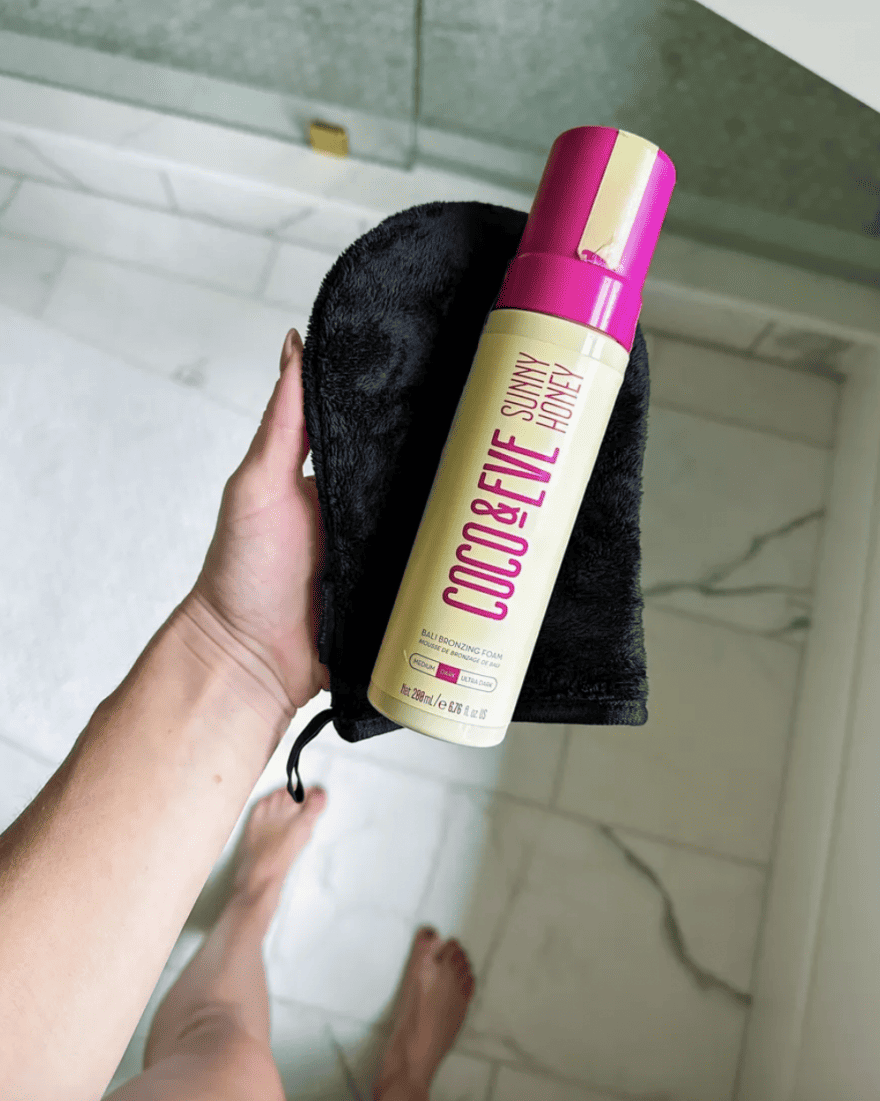
    Best Mousse for a Natural Color: Coco & Eve Sunny Honey Bali Bronzing Foam

    Coco & Eve’s Sunny Honey Bali Bronzing Foam is my favorite best tanning foam for a natural-looking tan. It applies really easily with a mitt (this set comes with one) and blends smoothly without streaks. I love that it contains vitamin C and E since it keeps my skin hydrated. I’m super picky when it comes to scents, but this one actually smells like tropical mango and guava fragrance, so no typical self-tanner smell.

    While it does take 6-8 hours to develop, I can usually apply it in the morning, wear it under my regular clothes, and then shower at night to rinse it off so I don’t get any transfer onto my sheets.

    If you buy from Coco & Eve directly, use code TERILYN15 for 15% off your order. Or you can order Coco & Eve from Amazon. Here’s a short video I filmed with some self-tanner application tips for this specific foam.

    Here’s my overall “grade” for Coco & Eve.

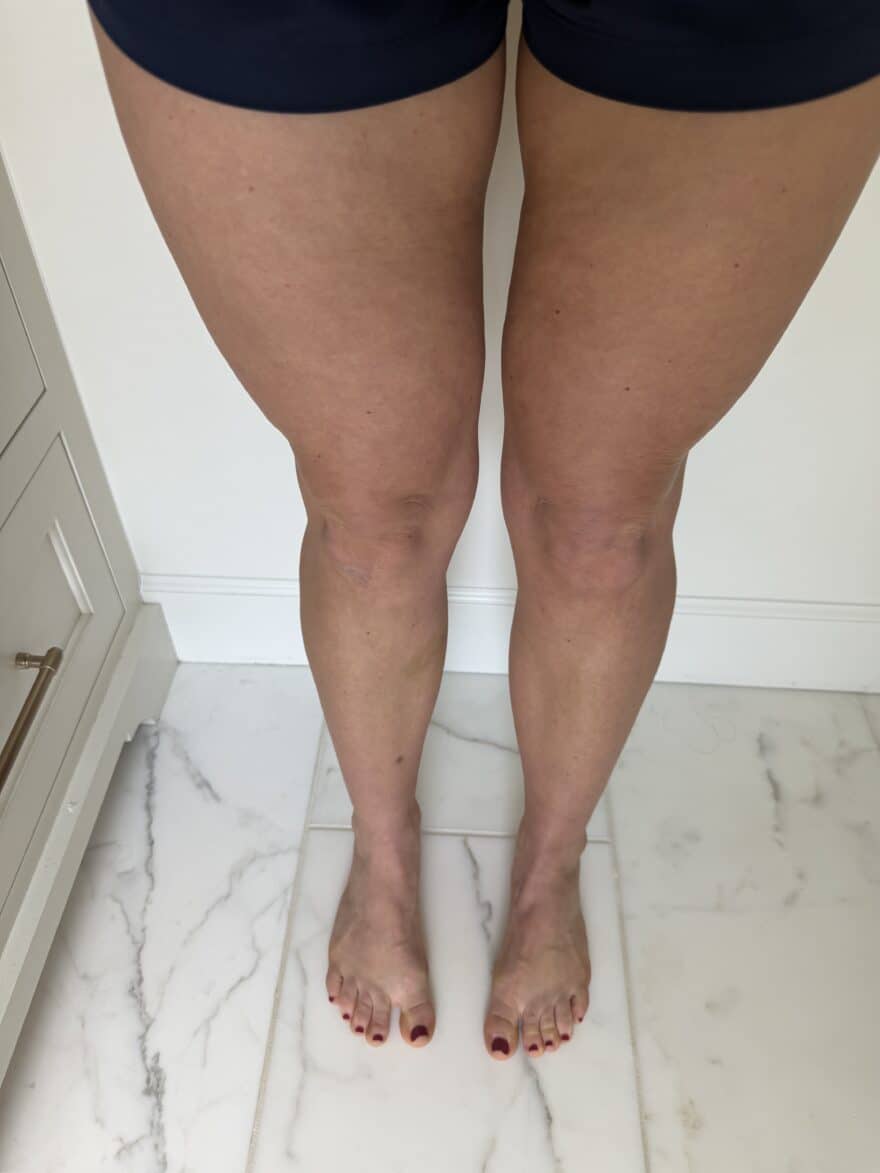
    • Ease of Use: A- (tends to deposit more color on my knees and ankles than I want, even with super cautious application)
    • Color Payoff: A- (lasts about 4 days before it starts to fade)
    • Scent: B+ (I wish it were scentless, but it’s not horrible.)

    Pros:

    • Natural golden-brown tan with no orange hue
    • Streak-free application with a mitt – the mitt is key. Buy this set that comes with a mitt. (If you don’t buy a set, you can use code TERILYN15.)
    • Hydrating ingredients (hyaluronic acid & coconut water)
    • Pleasant-ish tropical scent

    Cons:

    • Develops over 6–8 hours, so you do have to wear it all day or all night before showering.
    • Slightly pricier than drugstore options

    Here’s a photo I snapped last spring after I had applied the tanner. So good, right?


    Turn on your JavaScript to view content

    Best Non-Toxic Self Tanner: Beauty By Earth Self Tanner Mousse

    If you’re looking for a clean, non-toxic self-tanner with a lightweight, easy-to-apply formula, Beauty By Earth’s Self Tanner Mousse is a great choice. I used this when I was pregnant! This mousse formula gives you a streak-free tan that develops into a natural-looking bronze. It’s made with organic aloe vera, coconut oil, and cranberry extract, and I found it pretty hydrating. Plus, it’s free from synthetic fragrances, dyes, and parabens. If a non-toxic option is essential to you, this is my top pick (I also have my favorite non-toxic suntan lotions in this blog post).

    Here’s my overall grade for Beauty By Earth Self Tanner:

    • Ease of Use: A- (I found it a little harder to blend than other brands.)
    • Color Payoff: B- (The color isn’t as deep as Coco & Eve.)
    • Scent: A (It’s the best smelling of the bunch in this post)

    Pros:

    • Non-toxic self tanning lotion, organic ingredients
    • Lightweight mousse formula for even application
    • No synthetic fragrances or harsh chemicals
    • Hydrating with aloe vera and coconut oil
    • Streak-free finish

    Cons:

    • Develops over several hours, so plan to wear loose clothing for the day or change your sheets after sleeping in it.
    • Requires a mitt for best application (buy this set so it comes with a mitt).

    Turn on your JavaScript to view content

    Best Self Tanning Spray for Face: Coco & Eve Antioxidant Face Tanning Micromist

    Coco & Eve’s face mist is a game-changer if you want an effortless face tan. I used to just buff the remainder of my tanning foam around my face, but this is much better. The mist is super fine and gives an even application that develops over a few hours. I especially appreciate that it’s infused with hyaluronic acid and antioxidants to keep my skin hydrated and glowy, and it works perfectly underneath makeup.

    Use code TERILYN15 if you order from Coco & Eve. You can also buy the Coco & Eve Face Mist on Amazon. I shared a video on LTK where I tried this for the first time so you can get an idea of the application.

    • Ease of Use: A- (It mists beautifully like any other non-tanning face mist, but I have to be mindful to make sure my neck and decolletage somewhat match!)
    • Color Payoff: B- (It’s not quite as dark as the foam that I use on my body)
    • Scent: A+ (Mild and doesn’t linger)

    Pros:

    • Easy spray application
    • Lightweight formula that won’t clog pores
    • Hydrating with hyaluronic acid and dragon fruit extract
    • Develops within a few hours

    Cons:

    • Not as buildable as drops or serums

    Turn on your JavaScript to view content

    Honorable Mention: Salty Face Tanning Water

    The Salty Face Tanning Water is another excellent choice for a customizable face tan, but it’s more gradual, as you can see in the photos below. It’s actually one of the top-rated self-tanners for fair skin (which I mentioned below).

    Best for a Deep Color: Lux Unfiltered N°36 Supernatural Self-Tanning Mousse in Blood Orange

    If you want a truly deep tan, try Lux Unfiltered’s N°36 Supernatural Self-Tanning Mousse in Blood Orange. This mousse provides a deep, bronzed color while maintaining a natural finish. I used it for a while before switching to Coco & Eve for a slightly lighter tan.

    Here’s my overall grade for the Lux Unfiltered N°36 Supernatural Self-Tanning Mousse:

    • Ease of Use: B- (It’s dark so you have to be careful when applying since mistakes are more prominent.)
    • Color Payoff: A+ (Truly stunning color that’s natural without a hint of orange.)
    • Scent: A- (Smells pleasant but lingers.)

    Pros:

    • Deep, long-lasting tan
    • Vegan and cruelty-free formula
    • Hydrating with shea butter and hyaluronic acid

    Cons:

    • Stronger scent than other options
    • Requires more care with the application since it’s a deeper tan. Definitely buy a mitt (that one is cheap and is my favorite one I have!).

    Turn on your JavaScript to view content

    Best Tanning Mist: Tan Luxe The Water

    Tan Luxe The Water is a top pick for a lightweight, no-mess application. This is a clear tanning mist, or tanning water, that provides a glow without the risk of staining clothes or sheets (LOVE that). It’s packed with hydrating ingredients and gives a gradual, buildable tan. Since the mist is clear, though, you have to be careful not to spray too much in one spot since you won’t be able to see where it goes.

    It’s easy to spray, for the most part, and I like that I can mist my back, but the included mitt is slippery and hard to control. It’s also hard to use when you have to switch hands to apply to your non-dominant arm. While I love that it’s super lightweight, has a nice scent, and it’s somewhat easy to spritz onto my own back, the color payoff is pretty limited.

    Here’s my overall grade for the Tan Luxe The Water:

    • Ease of Use: C (It’s easy to spray, for the most part, and I like that I can mist my back, but the included mitt is slippery and hard to control. The oil is super messy and got on my rug, so beware.)
    • Color Payoff: C (Color is very minimal but natural-looking!)
    • Scent: A+ (Smells great going on.)

    Pros:

    • Lightweight, clear formula
    • No transfer onto clothes
    • Smells nice

    Cons:

    • Difficult to use the bottle with your non-dominant hand when spraying your dominant arm
    • Also requires careful application since you can’t see where the product is going
    • Limited color payoff

    Turn on your JavaScript to view content

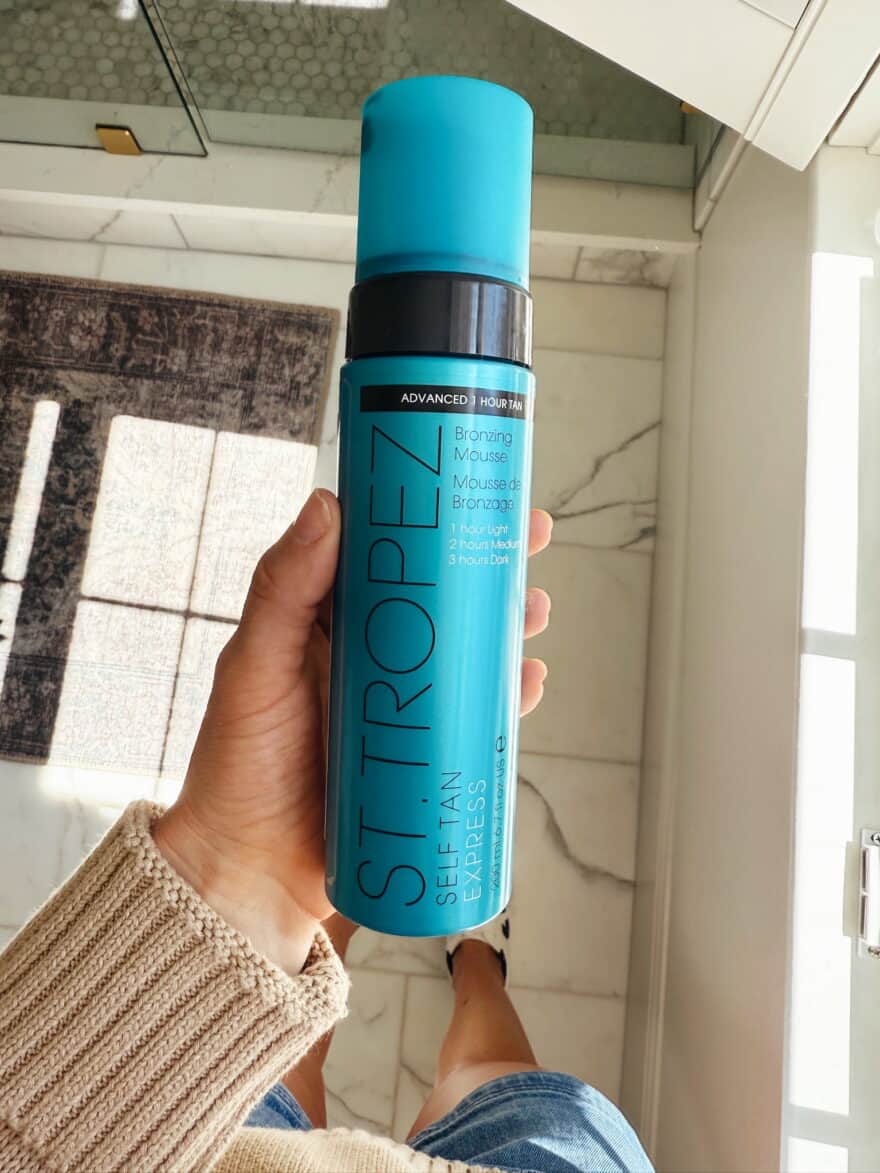
    Best Express Self Tanner: St. Tropez Self Tan Bronzing Mousse

    I recently tried the St. Tropez Bronzing Mousse, and it quickly became a top favorite. The texture is lightweight, it blends beautifully with a mitt, and the color is a natural, olive-toned bronze. It’s never streaky and not overly orange.

    I love that it’s an express tan since I hate sitting in tanner all day, and if you need a nice wash of color before family photos, a big date night, or a wedding weekend, you may not have the entire day to let a fake tan develop. It’s worth noting that I noticed the color got a little darker after 12 hours, which I honestly like! I also love the pleasant scent.

    Here’s my overall grade for the St. Tropez Bronzing Mousse:

    • Ease of Use: A (This blends the easiest of any brand and didn’t leave any lines the next day.)
    • Color Payoff: B+ (The color isn’t as deep as Coco & Eve, but, to be fair, it’s an express tan. But the color itself was beautifully natural without zero orange tones.)
    • Scent: A+ (Smells great going on, then fades, unlike most self-tanners that get smellier over time.)

    Pros:

    • Reliable, streak-free finish
    • Express tan – develops in 1-3 hours
    • Natural-looking color (not orange)
    • Long-lasting fade
    • Pleasant scent

    Cons:

    • Pricey
    • Color isn’t as deep as other express options

    If you’re new to self-tanning or just want something you can trust every single time, this is my top recommended self-tanner.


    Turn on your JavaScript to view content

    Self Tanner to Skip: Isle of Paradise

    I’ve tried Isle of Paradise, both the drops and the foam, and I hated them. The formula didn’t work well for me. It was either too streaky or too patchy, and the smell wasn’t great. The foam formula leaked everywhere, too. Definitely not a repurchase for me!

    Self Tanner Application Tips

    Here is a short video with tips for applying self-tanner evenly, but the key takeaways are:

    • Exfoliate your body before applying the tan. I like this Primally Pure body exfoliator.
    • Always use a mitt.
    • Start with two pumps and rub all over.
    • Sweep down on hands.
    • Use whatever is left over on your mitt for the back and front of your knee.
    • Gentle sweep down on your feet.
    • Wear something dark and lightweight like these wide-leg pants from Amazon while your tan develops.

    What Is the Best Self Tanner for Fair Skin?

    If you have fair skin, the wrong self-tanner can leave you looking orange or patchy. The best options develop into a natural shade without an orange hue. Mousse or foam formulas work well for fair skin because they allow for even application. To prevent dryness and streaks, look for hydrating ingredients like hyaluronic acid, Aloe vera, and shea butter. My top recommendations would be the Salty Face Tanning Water or the Coco & Eve mousse in the medium shade (I use the shade Dark, and I have light/medium skin).

    Final Thoughts

    The best self-tanner for you depends on your skin type, desired depth of color, and application preference. Whether you love a mousse, mist, oil, or drops, these top-rated picks will give you a natural, streak-free glow. Always prep your skin with exfoliation and moisturization before applying self-tanner, and use a mitt or brush for a flawless blend.

    Best Self-Tanning Products Recap:

    Which self-tanner is your go-to? Let me know in the comments!

    Shop The Post


    Turn on your JavaScript to view content

    The post The Best Self Tanners (Ranked by Ease, Color & Smell) appeared first on TeriLyn Adams.

  • Oozi Is My New Favorite Low-Mess Dinner

    Oozi Is My New Favorite Low-Mess Dinner

    Mariam Daud Oozi Recipe

    It’s rare to find a recipe that checks all the boxes: quick, easy, low-mess, and complete (meaning no sides required). When I spotted Mariam Daud’s oozi recipe in her new cookbook, I Sleep In My Kitchen, I knew immediately that I’d found one such gem.… Read more

    The post Oozi Is My New Favorite Low-Mess Dinner appeared first on Cup of Jo.

  • Oozi Is My New Favorite Low-Mess Dinner

    Oozi Is My New Favorite Low-Mess Dinner

    Mariam Daud Oozi Recipe

    It’s rare to find a recipe that checks all the boxes: quick, easy, low-mess, and complete (meaning no sides required). When I spotted Mariam Daud’s oozi recipe in her new cookbook, I Sleep In My Kitchen, I knew immediately that I’d found one such gem.… Read more

    The post Oozi Is My New Favorite Low-Mess Dinner appeared first on Cup of Jo.